
There are moments when one simple sentence makes you pause and really think. It might name a relationship you have struggled to make sense of, reveal a quiet truth about how people act, or put into words a feeling you never knew how to describe yourself. You read it once, then come back to it again, because those words feel strangely close to something you have always known.
This is what makes deep quotes so meaningful. They bring a fresh perspective to topics we often struggle to articulate — love, disappointment, self-worth, family, and personal growth. Some echo lessons we already learned the hard way; others gently challenge beliefs we have held for years.
A strong collection of reflections gathers all these ideas in one place. Instead of offering quick, fleeting motivation that fades within minutes, it holds thoughtful passages you can revisit, turn over in your mind, and connect to your own life experiences.

What Makes a Book of Deep Quotes Worth Reading?
Not every collection of quotes offers something meaningful. Some are enjoyable to read but quickly forgotten. Others stay with us because they express an uncomfortable truth, challenge an assumption, or put a complicated feeling into simple words.
A worthwhile book of deep quotes should offer more than temporary encouragement. It should give readers different perspectives on the experiences they encounter in everyday life.
Here are a few things that make such a book valuable:
- A deeper understanding of human nature: Reflections on people’s behavior, intentions, emotional patterns, and relationships can help us become more aware of the dynamics around us.
- A healthier view of self-worth: Meaningful ideas can remind us that our value isn’t determined by approval, attention, or how useful we are to others.
- Space for emotional reflection: Some passages help us recognize feelings we’ve avoided, including disappointment, resentment, regret, and loneliness.
- New ways of looking at life: A different perspective can sometimes change how we respond to familiar problems, even when the circumstances themselves haven’t changed.
The real value isn’t in agreeing with every sentence. It’s in finding ideas that encourage you to think more carefully about what you believe and how you live.
Why Understanding Human Nature Changes the Way You See Relationships
Relationships are among the most complicated parts of life because they involve expectations, emotions, boundaries, and different ways of thinking.
We sometimes spend years trying to understand why someone treats us a certain way. We may make excuses for repeated behavior, blame ourselves for other people’s reactions, or continue giving more than we receive because we hope things will eventually change.
Understanding human nature doesn’t mean becoming suspicious of everyone. It means learning to pay attention to actions rather than relying entirely on promises, recognizing unhealthy patterns, and accepting that not everyone will share our values or intentions.
This kind of awareness can change how we approach friendships, family relationships, romantic connections, and even our everyday interactions. It also helps us understand our own behavior: why we tolerate certain situations, why we struggle to say no, and why some relationships are harder to leave than others.
Books that explore human nature can provide useful starting points for these reflections. They encourage us to look beyond individual incidents and consider the deeper patterns behind them.
Learning to Understand Yourself Beyond Other People’s Opinions
Many people become so accustomed to meeting other people’s expectations that they gradually lose touch with their own needs.
They may avoid disagreement to keep the peace, feel guilty when setting boundaries, or question their decisions whenever someone disapproves. Even small choices can become exhausting when every decision depends on how others might react.
Developing a stronger sense of self-worth begins with noticing these patterns. It means asking whether your choices reflect what you genuinely believe or simply what you think will make other people happy.
Self-understanding also involves accepting imperfections. You can regret a decision without allowing it to define your entire identity. You can recognize your mistakes without treating yourself as someone who is unworthy of respect. And you can care about others without making their happiness your only responsibility.
This is why reflections on self-worth, emotional healing, and personal growth are worth revisiting. A sentence that feels ordinary at one point in life may become especially meaningful after you’ve experienced something that changes your perspective.
A Collection of Reflections for Different Stages of Life
These themes are brought together in Quotes That Rewire Your Mind by Grace Willow, a collection of 600 short reflections exploring human nature, self-worth, emotional healing, relationships, family patterns, and personal growth.
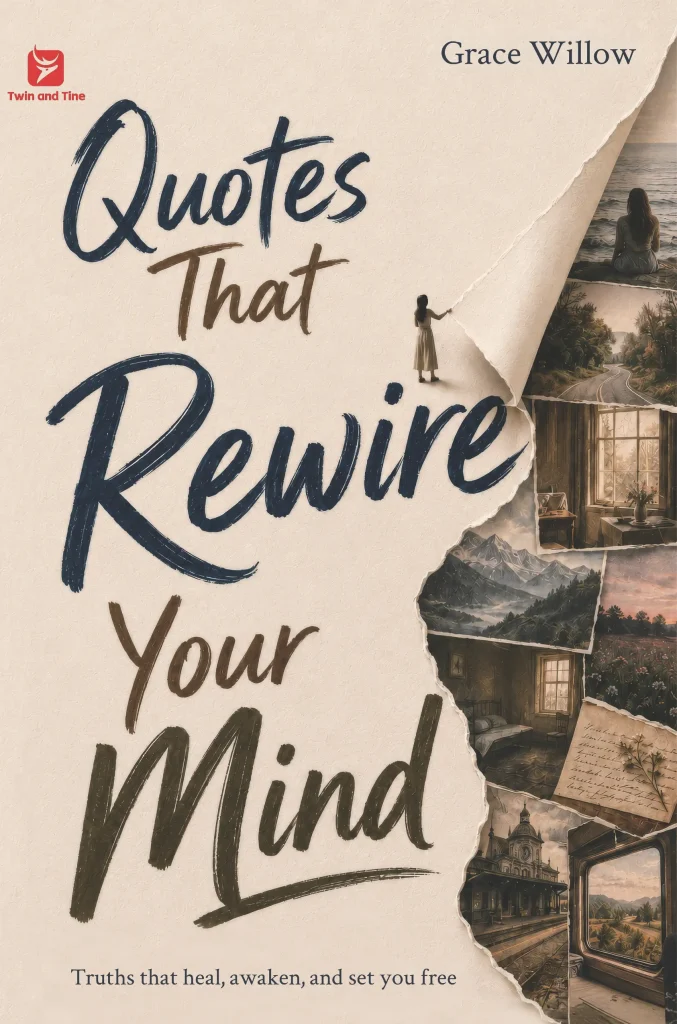
The book isn’t designed as a step-by-step self-help program. Instead, it offers concise thoughts and observations that invite readers to pause and reconsider familiar experiences.
Its range of topics makes it suitable for different moments in life. You might find yourself drawn to reflections about relationships when dealing with disappointment, return to ideas about self-worth when you’re struggling with confidence, or explore thoughts about human nature when trying to make sense of someone’s behavior.
Because the entries are short, you don’t need to follow a strict reading schedule or finish a chapter before putting the book down. You can read a few reflections at a time, mark the ones that resonate with you, and return to them whenever their meaning becomes relevant again.
For readers who enjoy thoughtful writing but don’t always have the time or energy for lengthy chapters, this format offers an accessible way to make reflection part of everyday life.
How to Get More From Reading Thought-Provoking Books
A book of deep quotes can be easy to read quickly, but slowing down often makes the experience more meaningful. Instead of trying to remember every passage, focus on the ideas that connect with your own experiences.
Try a few simple approaches:
- Read with a question in mind. Think about a relationship, personal challenge, or recurring feeling you want to understand better.
- Pause when a passage resonates. Consider why those particular words caught your attention and what experience they remind you of.
- Keep track of meaningful reflections. Write down a sentence or idea that you want to revisit later.
- Return to old passages. Your interpretation may change as you gain experience, making familiar words feel different over time.
- Connect reflection with action. If an idea reveals a pattern you want to change, consider one small step you can take in your daily life.
Reading becomes more valuable when it encourages honest self-examination rather than remaining a passive activity.
Finding Words That Help You See Life Differently
We don’t always need someone to tell us what to do. Sometimes, we need a thought that helps us recognize what has been happening all along.
The right words can make us reconsider what we accept in relationships, how we treat ourselves, and what we believe about other people. They won’t solve every problem, but they can give us a clearer starting point for understanding it.
For anyone who enjoys exploring life’s deeper questions, Quotes That Rewire Your Mind by Grace Willow brings together 600 reflections to revisit through different experiences and stages of personal growth. It is a book to keep nearby, not because every page has an answer, but because some ideas are worth returning to as you continue learning about yourself and the world around you.