You want to tell someone that something bothers you, but before you say anything, you start worrying about how they’ll react. Will they think you’re being demanding? Will the conversation turn into an argument? Maybe it’s easier to say “It’s fine” and move on, even though you’re still upset hours later.
This habit can show up in almost any relationship. You might agree to help a coworker when your schedule is already full, avoid telling your partner what you need, or soften a simple request so much that the other person doesn’t understand what you’re asking for. Over time, keeping the peace can leave you feeling unheard and frustrated.
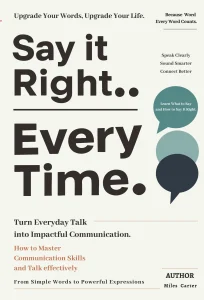
Communicating your needs clearly doesn’t mean becoming selfish or expecting everyone to agree with you. It means learning to express yourself honestly while still respecting the other person. For readers who want practical guidance on developing this skill, Say It Right Every Time by Miles Carter offers a useful starting point.
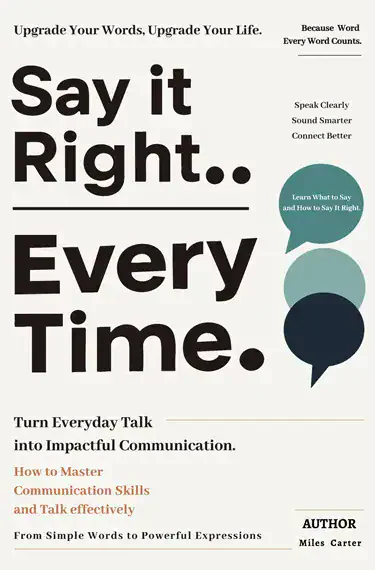
Say It Right Every Time by Miles Carter
Many communication problems aren’t caused by a lack of things to say. They’re caused by uncertainty about how to say them. You may understand exactly what you want, but struggle to find words that sound confident without seeming harsh, or considerate without making your needs disappear.
Say It Right Every Time focuses on practical communication scripts and frameworks that readers can apply to everyday conversations. The book includes 115 practical scripts and 15 communication frameworks covering mature expression, calm responses, clear requests, respectful disagreement, boundaries, and communication under pressure.
Rather than offering only general advice to “speak up” or “be more confident,” it helps readers think through the wording of real conversations. This is particularly helpful when emotions are involved and your usual response is to overexplain, apologize unnecessarily, or avoid saying what you mean.
Learn to Make Clear Requests
Sometimes people hint at what they need and hope others will understand. You might say, “I guess I’ll just do everything myself,” when what you really want is help with a shared responsibility. The other person may react defensively because the frustration is clear, but the actual request is not.
A more direct approach makes it easier for both people to understand the issue.
For example:
- Instead of “You never help me around the house,” try “Could you handle the dishes tonight? I need some time to finish my work.”
- Instead of “Sorry to bother you, but maybe you could help if you’re not too busy,” try “Could you review this document by Thursday?”
- Instead of saying “It’s fine” when plans repeatedly change, try “I understand things come up, but I’d appreciate more notice when our plans need to change.”
The goal isn’t to memorize a perfect sentence for every situation. It’s to recognize the difference between expressing a need clearly and hiding it behind frustration, guilt, or indirect hints.
Set Boundaries Without Overexplaining
One reason people struggle with boundaries is that they believe every refusal needs a convincing justification. They explain their entire schedule, apologize repeatedly, and keep adding reasons because they fear the other person won’t accept their answer.
But a respectful boundary can be brief.
Imagine a coworker asks you to take on another task just before the end of the day. If you already have more work than you can reasonably finish, you could say, “I can’t take on another task today. If this is urgent, let’s discuss which of my current priorities should move.”
This response communicates a limit while leaving room for a practical discussion. It doesn’t attack the coworker, and it doesn’t pretend that your existing responsibilities don’t matter.
Say It Right Every Time addresses boundary-setting alongside other communication skills, helping readers approach these moments with greater clarity rather than relying on automatic agreement or defensive explanations.

Disagree Without Turning the Conversation Into a Fight
Expressing a different opinion can feel risky, especially when you care about the relationship. You may stay quiet to avoid tension, or wait until your frustration builds and then respond more sharply than you intended.
A more constructive disagreement focuses on the issue instead of judging the person.
For instance, you might say, “I understand why that option appeals to you. I’m concerned about the timeline, though, because we may not have enough time to test it properly.”
This makes your position clear without dismissing the other person’s perspective. It also gives the conversation somewhere useful to go: toward understanding the concern and considering alternatives.
The book’s focus on respectful disagreement and calm responses is relevant to readers who want to speak honestly without feeling that every difference of opinion threatens the relationship.
Who Can Benefit From This Book?
Say It Right Every Time may be a good fit if you recognize yourself in several of these situations:
- You often agree to requests and regret it later.
- You struggle to explain what you need without apologizing excessively.
- You avoid difficult conversations until your frustration becomes hard to hide.
- You find yourself overexplaining simple decisions or boundaries.
- You want to disagree with someone while keeping the conversation respectful.
- You sometimes know what you want to say only after the conversation has ended.
These patterns can take time to change, particularly if you’ve spent years trying to avoid disappointing others. Having practical language to work with can make it easier to prepare for a conversation instead of relying on whatever comes out under pressure.
Start With One Conversation You Usually Avoid
You don’t need to change your communication style overnight. Choose one situation that regularly leaves you feeling uncomfortable, such as refusing an unreasonable request, asking for help, or telling someone that a comment bothered you.
Before the conversation, identify three things: what happened, what you need, and what you want to ask for. Keep your message focused on those points rather than trying to predict every possible reaction.
If the other person disagrees, give them room to respond without immediately withdrawing your request. You can listen to their perspective and adjust your approach where appropriate while still being honest about your own needs.
The purpose of communication isn’t to control how another person feels or to guarantee that every conversation ends in agreement. It’s to make mutual understanding possible without continually sacrificing your own voice.
If you want to express yourself more clearly, set boundaries with less guilt, and handle difficult conversations with greater confidence, Say It Right Every Time by Miles Carter offers practical scripts and frameworks to help you put those skills into practice.