
I sat in the meeting room, my palms sweating against the notebook. I had rehearsed my point for twenty minutes. When I finally spoke, my manager nodded, said “interesting,” and moved on. Thirty seconds later, my colleague said the same thing. Everyone loved it.
That moment stung. Have you been there? You have the ideas. You have the experience. But somehow, when you talk, the room doesn’t listen. And when someone else says the same thing, suddenly it’s brilliant.
Here’s what I learned after years of trial and error. Learning to communicate in the workplace is not about being louder. It’s not about talking more. It’s about understanding how words land, not just what they mean.
Why Does My Workplace Communication Keep Falling Flat?
The problem is rarely what you say. The problem is how you frame it.
Most of us communicate like we’re writing an email to ourselves. We assume people know our context. We assume they’ve been thinking about this topic all day. We assume they care about the details we care about.
They don’t.
Your boss has eleven other things on their mind. Your colleague is thinking about their kid’s school pickup. Your client is worried about their budget. When you dump a wall of context on them, they check out. Not because they’re rude. Because their attention is a limited resource.
I remember one performance review where my manager said something that changed everything. “You talk a lot, but I never know what you want me to do.” That sentence haunted me. I was giving information, sure. But information without direction is just noise.
The real skill of workplace communication is making it easy for the other person. You do the thinking. You do the structuring. They just have to say yes or no.
How Can I Communicate in the Workplace With Confidence?
The first thing I changed was my opening sentence.
Instead of “So I was looking at the numbers and I noticed some trends that might be interesting, and I think there could be an opportunity here,” I started saying “I have a recommendation. Can I share it?”
That’s it. Three seconds. The other person knows what’s coming. They know what role they play. They can prepare to listen.
The second thing I changed was my ending. Every point I make now ends with a clear ask. “Do you want me to move forward with this?” or “Which option works better for you?” or “Can I count on your support for this?”
The difference is massive. People respond to clarity. They respond to being given a simple choice. They respond when they know exactly what you need from them.
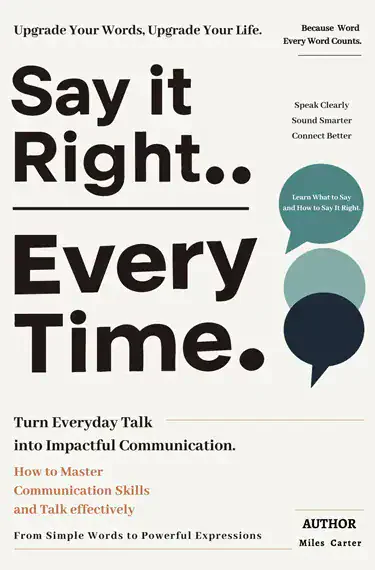
There’s a book that helped me rewire my entire approach. It’s called “Say It Right Every Time” by Miles Carter. The title sounds simple, but the content is actually deep. Carter teaches you how to express opinions with confidence and respond to others effectively, even in high-pressure situations like job interviews. What I loved most were the side-by-side comparisons of ineffective versus effective phrasing. You see the exact same idea presented two ways. One gets ignored. The other gets action. That book showed me that communication is a craft, not a talent. You can learn it. You can practice it. You can get better at it.
The “Say Yes” Framework: A Simple Communication Ritual
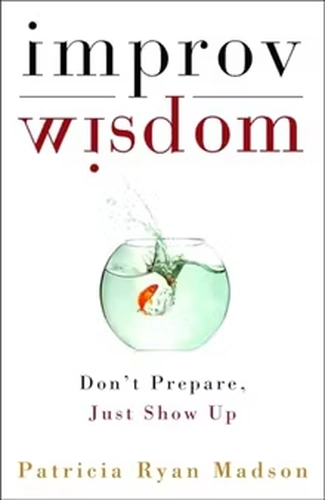
I want to share a framework that changed how I approach every conversation at work. I call it the “Say Yes” framework, and I borrowed the core idea from a book called “Improv Wisdom” by Patricia Ryan Madsen.
Madsen’s book is technically about improvisation, but man, it applies to everything. The core principle is simple. Say yes. Accept what’s given to you. Build on it instead of blocking it.
Here’s how I apply this to workplace communication. When someone presents an idea, even a bad one, I don’t start with “but.” I start with “yes, and.” The difference is subtle but powerful. “Yes, and what if we also considered…” sounds completely different from “But that won’t work because…”
The other principle from that book is “dare to be dull.” I love that one. You don’t need to be entertaining. You don’t need to be clever. You just need to be clear. Sometimes the most effective thing you can say is the most obvious thing. “We’re behind schedule.” “This budget doesn’t work.” “I need more time.” Dull, yes. Also incredibly useful.
The third principle is “don’t just do something, stand there.” In meetings, that means pausing. Letting silence exist. Not filling every gap with words. When you stop talking, other people start. And sometimes, what they say is exactly what you needed to hear.
What About When Nobody Listens to My Ideas?
This is the hardest one, right? You’ve made your point. You’ve been clear. And still, nothing changes.
Here’s a hard truth I learned. If nobody listens to your ideas, it might not be your delivery. It might be your relationships. Communication doesn’t happen in a vacuum. It happens between people who trust each other.
I used to think I could win arguments with logic alone. I was wrong. People don’t say yes to logic. They say yes to people they trust. So I started investing time before the big moments. Coffee chats. Quick check-ins. Asking about their weekend. It felt fake at first. But it wasn’t. It was building a bridge that my words could later cross.
Another book that helped me here is “Made to Stick” by Dan and Chip Heath. They talk about why some ideas survive and others die. The answer is not complexity. It’s concreteness. It’s story. It’s unexpectedness. When I stopped presenting abstract concepts and started telling short stories about real customers, real problems, real outcomes, people started paying attention. Attention is the most precious commodity in any workplace. If you can’t hold it, you can’t communicate.

How Does Age or Experience Level Change My Approach?
If you’re early in your career, your goal is different. You’re not trying to convince anyone. You’re trying to be seen as reliable. So communicate in the workplace with a focus on follow-through. Say what you’ll do. Do what you said. Report back. That builds a reputation that makes every future conversation easier.
If you’re mid-career, you’re dealing with a different problem. You have expertise, but you might not have authority. Your job is to translate your expertise into language that decision-makers can act on. Don’t say “the technical architecture won’t support that.” Say “this option costs us two weeks and the other option costs us two days. Here’s my recommendation.”
If you’re in leadership, your communication shapes the entire culture. Every word you say is amplified. Every joke is repeated. Every criticism is remembered. The most effective leaders I’ve seen communicate less and listen more. They ask questions instead of giving answers. They let the team arrive at the conclusion themselves.
What If I’m an Introvert or Just Not a Natural Talker?
Good news. You don’t need to be a natural talker. You need to be a prepared talker.
Before every important conversation, I write down three things. The one point I want to make. The one question I want to ask. The one thing I need from the other person. That’s it. Three lines on a sticky note. That preparation takes five minutes and it transforms how I show up.
I also learned to use written communication as my secret weapon. If you’re better with words on a page, send a short email before the meeting. Summarize your point. Attach your data. Then in the meeting, refer to it briefly. “I sent around a summary. The key takeaway is…” Now you’re leading the conversation, not chasing it.
One more tip. Practice saying your key points out loud. In the car. In the shower. To your dog. Your mouth needs to catch up with your brain. The first time you say a sentence, it feels awkward. The tenth time, it feels natural. By the time you’re in the actual meeting, your delivery will sound effortless, even if it took real work to get there.
One Last Thing
I remember the day I finally nailed it. I walked into a meeting, made my point in forty seconds, and the room went quiet. Then my manager said, “That’s a great idea. Let’s do that.”
I didn’t celebrate. I just felt this huge wave of relief. It wasn’t luck. It wasn’t magic. It was the result of months of small changes. Better structure. Better questions. Better relationships.
You can communicate in the workplace too. Not someday. Not when you’re more confident. Starting tomorrow. Starting with your next conversation.
Because your ideas deserve to be heard. And they won’t be heard until you say them in a way people can actually receive.