
When Your Mind Won’t Let You Move On
You finish a conversation with a colleague, get home, and start replaying something you said. Maybe your joke didn’t land the way you expected, or someone replied with a shorter message than usual. You tell yourself it probably meant nothing, but ten minutes later, you’re still analyzing their tone, searching for what you might have done wrong.
By bedtime, the conversation has become a much bigger problem in your head than it was in real life. You feel mentally drained, even though nothing particularly difficult happened that day. The next morning, you may find yourself worrying about a completely different situation, repeating the same cycle all over again.
This is what mental exhaustion can look like when overthinking becomes a habit. You spend so much energy reviewing the past, anticipating problems, and trying to control other people’s reactions that you have less attention left for your actual life. Breaking that cycle doesn’t mean forcing yourself to think positively all the time. It means learning to recognize which thoughts deserve your attention and which ones are keeping you stuck.

Why Is It So Hard to Stop Mentally Draining Yourself?
Mental exhaustion doesn’t always come from having too much to do. Sometimes, it comes from what happens in your mind while you’re doing it.
You might spend an entire afternoon worrying about a decision that takes five minutes to make. You may keep explaining yourself to someone who has already understood your point, simply because you feel uncomfortable with the possibility that they might disagree. Or you may revisit an old mistake repeatedly, hoping that thinking about it one more time will somehow make the past feel different.
Several patterns can contribute to this cycle:
- Overthinking every possibility. You try to anticipate every outcome before taking action, but the more scenarios you consider, the harder it becomes to make a decision.
- Taking other people’s reactions personally. A delayed reply, a change in tone, or a disagreement becomes something you feel responsible for fixing.
- Holding yourself to unrealistic standards. You expect yourself to make the right decision, say the perfect thing, and avoid disappointing anyone.
- Revisiting past mistakes. Instead of learning from what happened, you repeatedly criticize yourself for not knowing better at the time.
- Trying to control what you cannot predict. You spend energy managing other people’s opinions, future outcomes, and situations that are not entirely within your control.
These habits often develop from a desire to avoid mistakes, rejection, or regret. The problem is that thinking harder doesn’t always create greater certainty. Sometimes, it simply gives worry more opportunities to repeat itself.
How to Stop Overthinking and Protect Your Peace of Mind
1. Separate What Happened From What You Fear It Means
A major source of mental exhaustion is treating an interpretation as if it were a fact. Someone doesn’t respond to your message, and you conclude that they’re upset with you. You make a small mistake at work and assume that everyone now questions your ability.
When you notice this happening, pause and separate the observable event from the story your mind has built around it.
Ask yourself three questions:
- What do I actually know happened?
- What am I assuming without enough evidence?
- Is there anything useful I can do about this right now?
You don’t need to convince yourself that everything will turn out perfectly. You simply need to leave room for explanations other than the one that makes you most anxious. This small shift can prevent an uncertain situation from turning into hours of unnecessary worry.
2. Stop Treating Every Problem as Something You Must Solve Immediately
Some problems need action, but others need time, information, or acceptance. The difficulty is that when you’re anxious, waiting can feel irresponsible. You may believe that if you keep thinking, planning, or checking, you’ll prevent something from going wrong.
Try identifying whether a concern has a practical next step. If you made a mistake in an email, you can send a clarification. If you’re uncertain about a decision, you can gather the information you actually need. But if you’re replaying a conversation that has already ended and have no new information to work with, another hour of analysis may not help.
Give yourself permission to pause when thinking stops producing useful answers. Return to a task in front of you, take a walk, or write down the concern and decide when you’ll revisit it. The goal isn’t to ignore real problems; it’s to stop spending unlimited energy on problems that additional thinking cannot resolve.
3. Learn to Let Other People Have Their Own Reactions
You can be considerate without making yourself responsible for everyone’s comfort. Yet if you tend to people-please, set few boundaries, or fear disappointing others, even a small disagreement can occupy your thoughts for the rest of the day.
You might agree to something you don’t have time for, then feel resentful. You might say yes because you don’t want to seem difficult, then spend hours wondering why you couldn’t say no. Over time, this pattern leaves you exhausted because your decisions are shaped more by anticipated reactions than by your actual needs.
Start with small, clear boundaries. Instead of giving a long explanation for every decision, try saying, “I can’t take that on this week,” or “I need some time to think before I answer.” You can listen to another person’s disappointment without automatically changing your decision.
Other people may not always agree with you, and that doesn’t necessarily mean you’ve done something wrong. Learning to tolerate that discomfort can free up a surprising amount of mental energy.
4. Replace Self-Criticism With a More Useful Response
After making a mistake, you might tell yourself that you should have known better, that you always get things wrong, or that you have somehow ruined an opportunity. These thoughts may feel like accountability, but repeatedly attacking yourself rarely makes it easier to respond constructively.
Try changing the question from “What’s wrong with me?” to “What can I learn from this?” If you handled a conversation poorly, consider what you would do differently next time. If you missed a deadline, identify what made the task difficult to manage and what support or planning might help.
You can acknowledge responsibility without turning a single mistake into a judgment about your entire character. Self-forgiveness doesn’t mean pretending nothing happened. It means allowing yourself to learn from the past without requiring yourself to keep suffering over it.
A Book to Help You Break the Cycle of Mental Exhaustion
If you recognize yourself in these patterns, Break the Anxiety Circle by Miles Carter, published by Twin&Tine, offers a practical place to explore the habits that keep your mind stuck in repetitive worry and self-criticism.
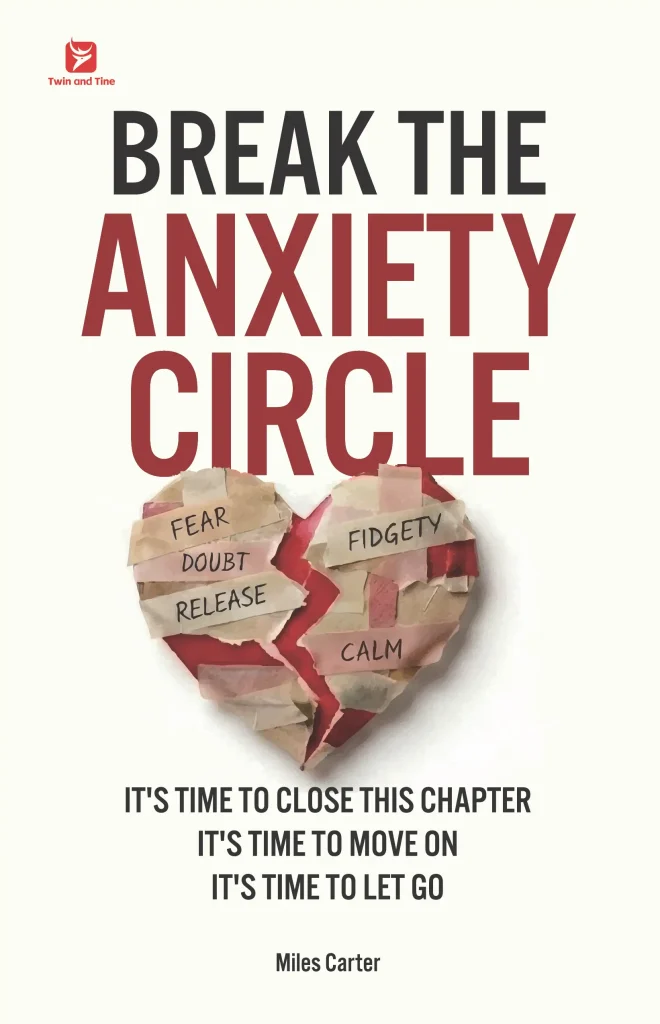
Rather than focusing only on calming down in the moment, the book explores the emotional patterns behind anxiety, including overthinking, regret, self-worth, people-pleasing, sensitivity, and difficulty letting go of the past. It also addresses boundaries, attachment patterns, and the ways your reactions can influence your relationships and everyday decisions.
The book is particularly relevant if you often find yourself:
- Replaying conversations and worrying about what other people think of you.
- Blaming yourself for past decisions even after you’ve tried to move forward.
- Feeling responsible for other people’s emotions or struggling to say no.
- Getting caught in anxious thoughts that interfere with rest and everyday activities.
- Knowing you need a change but finding it difficult to break familiar emotional habits.
Break the Anxiety Circle is designed to help readers better understand these patterns and develop a healthier relationship with their thoughts, emotions, and sense of self-worth. It offers a useful starting point for people who want to move beyond repeatedly analyzing their problems and begin responding to them differently.
If mental exhaustion has become a familiar part of your day, explore Break the Anxiety Circle and discover a more practical approach to understanding anxiety and changing the patterns that keep it going.
You Don’t Have to Solve Every Thought in Your Head
Breaking free from mental exhaustion rarely happens because you find one perfect answer to every worry. More often, it begins when you recognize that you don’t have to replay every mistake, anticipate every reaction, or make every person understand your decisions.
Start by noticing one pattern that drains you most. Perhaps you repeatedly check whether someone is upset with you, criticize yourself long after making a mistake, or postpone decisions because you’re afraid of choosing incorrectly. When that pattern appears, pause and ask whether your next thought will help you take useful action or simply keep the worry alive.
You may not feel completely at ease right away, and that’s okay. The aim is not to eliminate every uncomfortable feeling but to stop allowing those feelings to consume so much of your attention. With practice, you can begin to spend less time fighting with your own mind and more time living the life happening in front of you.