You are not asking for too much.
That is the first thing worth unlearning. The belief that standing up for yourself is excessive. That setting a boundary is difficult. That saying “don’t speak to me like that” is an overreaction.
You are a person, just like everyone else. You have the same rights, the same dignity, the same claim to respect. So why do you let people who are equal to you step over you?
They are not superior to you. They are not entitled to your compliance. And yet you have spent years acting as if they are, not because you believe it, but because you were taught that standing up for yourself comes at a cost you could not afford to pay.
Why Women Are Taught to Stay Quiet
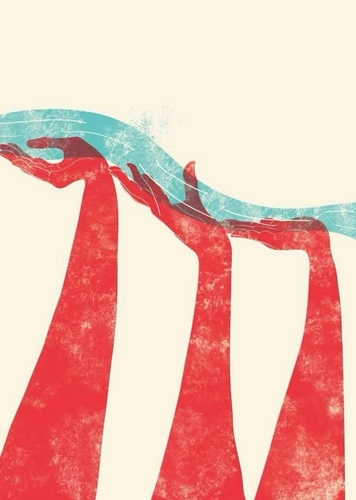
This is not a personal failing. It is a pattern that has been reinforced for most of your life.
Girls are praised for being agreeable and criticized for being assertive. They are called good when they keep the peace and difficult when they set a boundary. They learn, early on, that their value comes from making other people comfortable, not from protecting themselves.
By the time they are adults, the pattern is automatic. They apologize when they are not sorry. They explain themselves when no explanation is needed. They swallow the response they wanted to give and replace it with a smile.
Standing up for yourself is not a skill you were encouraged to develop. It is a skill you have to learn on your own, often later in life, often after realizing that the cost of not standing up is higher than the cost of doing it.
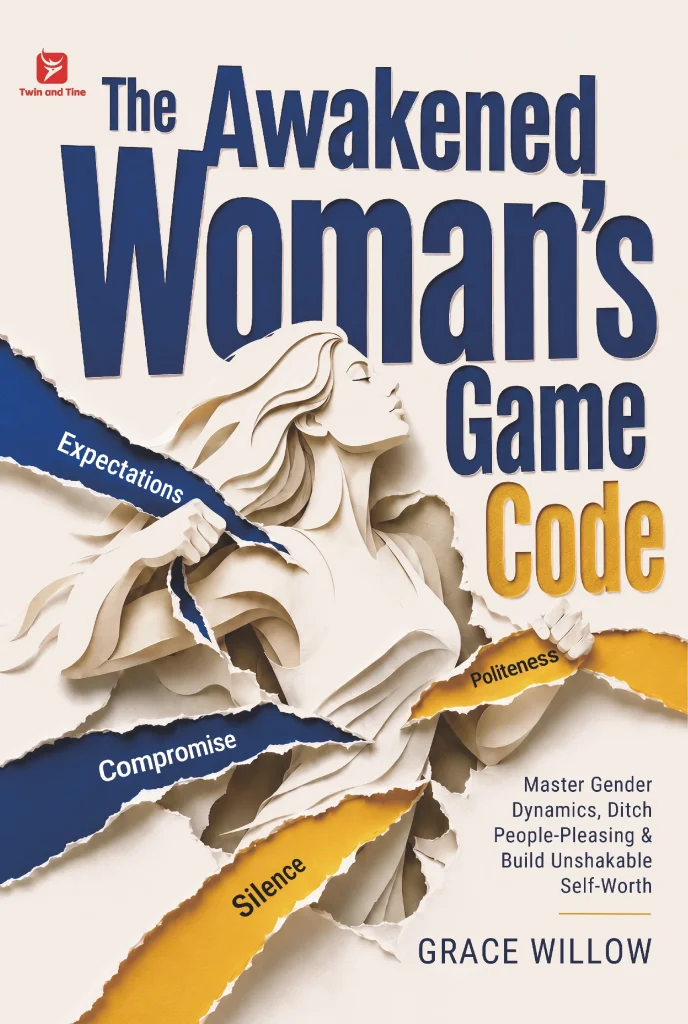
I spent years in that pattern. I over-explained, over-apologized, and over-gave until I could not remember what I actually wanted. What changed was not a single moment of courage. It was reading something that finally named the pattern I had been living inside. That book was The Awakened Woman’s Game Code by Grace Willow, and it gave me language for the thing I had been doing without realizing it: treating my own boundaries as suggestions while treating everyone else’s as rules.
What Standing Up Actually Looks Like
Standing up for yourself is not a dramatic confrontation. It is not a speech. It is not the moment you finally tell someone off.
Most of the time, it is quiet. It is a short sentence instead of a paragraph. It is a no without an apology attached. It is a consequence instead of an argument. It is leaving a conversation that has become disrespectful. It is limiting access to someone who has shown they cannot handle it.
It is also a decision about what you are willing to lose. Because standing up for yourself does cost something. It costs you the comfort of being liked by everyone. It costs you the relationships that were built on your compliance. It costs you the version of yourself that kept the peace at the expense of her own dignity.
What it gives you is a sense of yourself as someone who matters. Not because you demanded it, but because you finally stopped acting like you did not.
The Sentence That Changed How I Set Boundaries
A stop sign does not explain why you should stop. It is just there, clear and non-negotiable. Your boundaries can work the same way.
You do not need to justify them. You do not need to make them palatable. You do not need to soften them until they barely sound like a boundary anymore.
“I don’t tolerate that” is enough. “Don’t do that again” is enough. “That doesn’t work for me” is enough.
The more you explain, the more you signal that your boundaries are open to negotiation. They are not. A boundary without a consequence is just a suggestion, and a suggestion can be ignored. A consequence is what teaches people that your line is real.
This was the part I struggled with most. I could say no. I could state a boundary. But I did not follow through with anything when it was crossed. I kept giving second, third, fourth chances. I kept explaining. I kept hoping the person would understand.
What I learned, slowly and painfully, is that understanding is not the same as respecting. Some people understand your boundary perfectly and choose to cross it anyway. They are not confused. They are testing whether your line is real.
Being Willing to Lose People
This is the hardest part. Many women stay in dynamics that diminish them because they are afraid of what will happen if they stop complying. They are afraid of the conflict. They are afraid of the loss. They are afraid of being alone.
But here is what you learn when you start standing up for yourself: some people will leave. And those people were never there for you. They were there for the version of you that made everything easy for them.
The people who stay are the ones who respect your boundaries, who take your needs seriously, who do not punish you for having limits. They are the ones who were worth keeping all along.
The Awakened Woman’s Game Code helped me see this without flinching. It does not promise that standing up for yourself will be painless. It does not tell you that everyone will react well. It tells you the truth: too much availability kills value, and a woman who can be had at a low cost will never be treated like the prize.
That sentence was uncomfortable to read the first time. It sounded harsh. But it named something I had been avoiding: I had made myself cheap to keep. I had made myself easy to keep. And I had confused being loved with being tolerated.
The book does not ask you to become cold or manipulative. It asks you to stop giving away what you cannot afford to lose. It examines why being wanted is not the same as being chosen. It looks at how people-pleasing and self-criticism keep women stuck in dynamics that undermine their sense of worth. And it offers a way out that does not require becoming someone else.
If you have been waiting for permission to stand up for yourself, this book is not permission. It is evidence. Evidence that the pattern you have been living inside is real, that it was learned, and that it can be unlearned.
What You Are Actually Asking For
When you stand up for yourself, you are not asking for special treatment. You are not asking to be put on a pedestal. You are not asking for more than anyone else.
You are asking to be treated like a person. A person with a line. A person whose no means no. A person who will not keep explaining herself to someone who has already decided not to listen.
You are not difficult. You are not too much. You are not asking for too much. You are asking for the bare minimum, and you are finally unwilling to accept less.
That is not aggression. That is self-respect.
FAQ: Standing Up for Yourself as a Woman
What if I freeze in the moment and do not say anything?
Freezing is a normal nervous system response. You do not need to force a response in the moment. You can address it later, or you can notice it and practice for next time. Standing up for yourself is a skill, not a performance.
Is standing up for myself the same as being aggressive?
No. Aggression is about winning. Standing up for yourself is about being clear. You can be firm without being harsh, and you can hold a boundary without making it a fight.
What if people get upset when I start standing up for myself?
Some will. That is not a sign you did something wrong. It is a sign that the relationship was built on your compliance, not your connection.
Can I learn to stand up for myself if I have been a people-pleaser my whole life?
Yes. It takes practice, but it is not a personality trait you are stuck with. It is a set of skills that can be developed over time.