
You may think being a good partner means being patient, giving second chances and compromising. But little by little, you start tolerating hurtful treatment, hiding your needs, and feeling guilty whenever you choose yourself.
You keep explaining your pain, only to circle back to the same exhausting conversation. You are always the one adjusting plans, bringing up hard topics and making excuses for their lack of effort. You still care, yet you stop receiving care in return.
Healthy boundaries do not make you cold or unwilling to compromise. They mark your limits. Remember this: compromise requires two people. If you are the only one giving ground, it is not compromise. It is surrender.

What Do Healthy Relationship Boundaries Look Like?
A boundary is a personal limit that helps you decide what you are comfortable with and how you will respond when something crosses that line. It is not a rule that forces another person to behave exactly as you want. Instead, it clarifies what you are willing to participate in and what you will do to protect your well-being.
In a romantic relationship, healthy boundaries might include:
- Emotional boundaries: You can listen to your partner’s feelings without accepting responsibility for managing every emotion they experience.
- Time boundaries: You can maintain friendships, interests, and personal time instead of making yourself available whenever your partner wants attention.
- Communication boundaries: You can expect disagreements to happen without accepting insults, intimidation, or repeated disrespect.
- Physical boundaries: You have the right to decide what physical affection and intimacy you are comfortable with, regardless of how long you have been together.
- Privacy boundaries: Being in a relationship does not mean you must surrender every private conversation, personal thought, or account password.
- Effort boundaries: You can expect mutual participation rather than continually carrying the relationship by yourself.
The exact boundaries will differ from one person to another. What matters is that you understand your own limits instead of automatically accepting someone else’s expectations.
7 Relationship Boundaries Every Woman Should Consider
1. Stop Accepting Inconsistent Effort as Something You Must Fix
You initiate most conversations, arrange nearly every date, and keep trying to bring the relationship closer. When the other person becomes distant, you assume you need to try harder.
It is natural for partners to have different communication styles or periods when they are busy. The problem arises when a consistent lack of effort becomes the relationship’s normal pattern, and you are expected to compensate for it indefinitely.
You can express what you need and give the other person an opportunity to respond. But you cannot create mutual commitment by doing both people’s work.
What you can say: “I want a relationship where we both make an effort. I am happy to work on this together, but I cannot be the only person trying.”
After communicating your needs, pay attention to what changes over time. Consistent actions tell you more than repeated promises.
2. Say No Without Writing a Long Explanation
Some women feel they must make a convincing case every time they decline a request. They explain their schedule, apologize repeatedly, and offer alternatives even when they have already reached their limit.
This habit often comes from a fear of disappointing people. You may believe that if you explain yourself well enough, nobody will be upset with you.
But a reasonable boundary does not become more valid because someone agrees with it.
What you can say: “I understand that you would like me to do that, but I am not available.”
You can be considerate without turning every decision into a negotiation. Someone may feel disappointed by your answer, and you can acknowledge that feeling without changing your decision simply to remove the discomfort.
3. Do Not Confuse Love With Constant Availability
A healthy relationship leaves room for two people to have individual lives. You can love your partner and still want an evening alone, time with friends, or the freedom to pursue your own interests.
If you feel anxious whenever you do something independently, ask yourself whether the relationship has gradually taught you to treat personal space as a sign of disloyalty.
What you can say: “I value our time together, and I also need time for myself. Both are important to me.”
Personal space is not necessarily distance from the relationship. It can help both partners maintain their identities rather than relying on the relationship to meet every emotional and social need.

4. Refuse to Normalize Disrespect During Arguments
Disagreements are inevitable. People get frustrated, misunderstand one another, and sometimes express themselves poorly. But there is a difference between an uncomfortable conversation and a repeated pattern of humiliation, threats, name-calling, or intimidation.
You do not have to remain in a conversation that has become degrading just to prove that you are patient or mature.
What you can say: “I want to resolve this, but I am not willing to continue while we are speaking to each other this way. We can return to the conversation when we are calmer.”
A boundary is most useful when it includes an action you can take. If the disrespect continues, you can end the conversation or leave the situation if it is safe to do so. If you feel threatened or controlled, prioritize your safety and seek support from someone you trust.
5. Stop Taking Responsibility for Someone Else’s Emotions
Your partner may feel disappointed when you say no, frustrated when you disagree, or unhappy when you make a decision they would not have made. Those feelings can matter to you without becoming yours to fix.
If you constantly change your behavior to prevent another person’s negative reaction, you may gradually stop expressing your genuine preferences.
What you can say: “I understand that you feel differently, but I need to make the decision that is right for me.”
You can listen, show empathy, and consider another person’s perspective without automatically giving up your own. A relationship should make space for two people’s feelings, not require one person to suppress theirs to keep the other comfortable.
6. Be Clear About What You Expect From a Relationship
Sometimes, people stay in uncertain relationships because they are afraid that asking for clarity will make them seem needy. They accept vague promises, inconsistent commitment, or an arrangement that leaves them continually wondering where they stand.
Wanting clarity is not the same as demanding that another person follow your timeline. It means being honest about what you want and finding out whether your expectations are compatible.
What you can say: “I am looking for a relationship with mutual commitment and clear intentions. I would like to understand whether we want the same thing.”
The answer may not be the one you hoped for, but clarity allows you to make decisions based on reality instead of spending months trying to interpret mixed signals.
7. Do Not Abandon Your Values to Keep Someone Interested
Perhaps you stop seeing certain friends because your partner disapproves, hide your opinions to avoid disagreement, or accept a relationship dynamic that conflicts with what you genuinely want.
Compromise is part of building a life with another person. Repeatedly abandoning your values, however, can leave you feeling disconnected from yourself.
What you can say: “I respect that you see this differently, but this is something that matters to me, and I do not want to give it up just to avoid conflict.”
You do not need to agree on everything. You do need enough room to express your beliefs, pursue your goals, and remain a person with your own identity.

How to Maintain Boundaries When You Feel Guilty
Knowing your boundaries is one thing. Maintaining them when someone reacts negatively is another.
You might set a limit, feel uncomfortable, and immediately want to take it back. You may worry that you sounded selfish or wonder whether you should have been more accommodating. These feelings do not automatically mean your boundary was unreasonable.
When guilt appears, try the following steps.
1. Pause before reversing your decision.
You do not have to respond to every request immediately. Give yourself time to consider whether you genuinely want to agree or are simply afraid of someone’s reaction.
2. Separate discomfort from wrongdoing.
Someone being disappointed does not automatically mean you have hurt them unfairly. Ask yourself whether you communicated respectfully and whether your decision reflects a reasonable personal limit.
3. Repeat your boundary instead of endlessly defending it.
If you have already explained your position, you can calmly restate it. Repeating the same explanation in different ways may not help if the other person is unwilling to accept your answer.
4. Look at patterns rather than isolated reactions.
A partner may initially struggle with a new boundary and later learn to respect it. What matters is whether there is genuine willingness to understand you, or whether guilt, pressure, and disrespect repeatedly appear whenever you assert yourself.
5. Practice with small decisions.
Start by expressing a preference about how you spend your time, declining a request when you are unavailable, or asking for a change in communication. Each experience can help you become more comfortable expressing your needs.
Boundaries do not require you to become confrontational. You can be warm, direct, and respectful while remaining firm about what matters to you.
Signs Your Relationship Boundaries May Need Attention
Sometimes, the need for stronger boundaries becomes clearer when you look at your daily habits rather than the relationship as a whole.
Consider whether you regularly:
- Feel guilty whenever you prioritize your own needs.
- Worry excessively about upsetting your partner.
- Keep quiet about problems because you fear their reaction.
- Give more time and emotional energy than you can comfortably sustain.
- Accept repeated broken promises without addressing the pattern.
- Find yourself explaining the same personal limit again and again.
- Feel that maintaining the relationship requires you to become a different person.
One or two of these experiences do not automatically mean your relationship is unhealthy. Stressful periods and misunderstandings happen. However, if several patterns persist and your attempts to address them are repeatedly dismissed, it may be time to reconsider what you are accepting and what needs to change.
A Book for Women Who Want to Stop Losing Themselves in Relationships
Understanding relationship boundaries is not always difficult in theory. The harder part is applying them when you love someone, fear rejection, or have become accustomed to putting other people’s needs first.
You may know you deserve respect but still struggle to walk away from inconsistent effort. You may recognize that you are doing too much but feel selfish when you stop. Or you may keep hoping that if you become more patient, accommodating, or understanding, the relationship will finally give you the security you want.
This is where The Awakened Woman’s Game Code can be a useful next read.
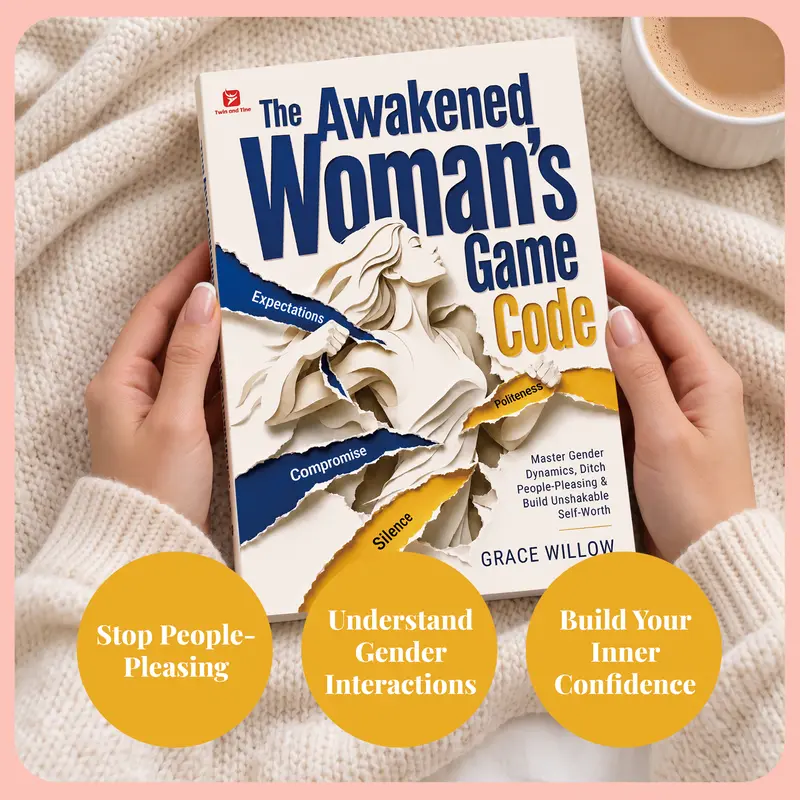
The book explores themes related to women’s self-worth, relationship dynamics, personal boundaries, and the tendency to accept less than they truly want. Rather than treating every relationship problem as something women must solve by giving more, it encourages readers to examine their own expectations, recognize unhealthy patterns, and think more deliberately about the way they participate in relationships.
If you are trying to understand why you keep putting someone else’s needs ahead of your own, the book offers a starting point for reflecting on questions such as:
- Am I choosing this relationship because it meets my needs, or because I am afraid of losing it?
- Am I making a genuine compromise, or repeatedly abandoning what matters to me?
- Am I paying attention to someone’s consistent behavior, or holding on to the person I hope they will become?
- Can I express what I need without feeling that I must earn the right to ask for it?
These questions are worth considering because stronger boundaries are not just about learning the right words. They also involve understanding your standards, recognizing your habits, and deciding what kind of relationship you want to build.
The Awakened Woman’s Game Code is worth exploring if you want to reflect more deeply on self-worth, dating dynamics, and the difference between caring for someone and losing yourself in the process.
You Can Love Someone Without Losing Yourself
Healthy relationship boundaries do not guarantee that every relationship will work out. Sometimes, communicating your needs brings two people closer. Other times, it reveals that their expectations, values, or willingness to make an effort are not compatible with yours.
Both outcomes give you information you can use.
You do not have to become less caring, less generous, or less loving to protect yourself. You can listen without agreeing to everything, compromise without abandoning your values, and give someone another chance without ignoring a repeated pattern.
Start with one boundary that would make your daily life healthier. Express it clearly, follow through where you can, and observe whether the relationship has room for your needs as well as the other person’s.
The right relationship should give you room to be yourself, not require you to disappear to keep it alive.