
The moment happens fast. A cutting remark. A backhanded compliment. A comment designed to embarrass you. Your face gets hot, your mind goes blank, or you say something you wish you could take back.
Then, hours later, the perfect response suddenly comes to mind.
You replay the conversation, wondering why you didn’t speak up, why you laughed it off, or why you let someone make you feel small. What bothers you most is often not just the insult itself, but the feeling that you couldn’t respond the way you wanted to.
If this sounds familiar, you’re not alone. The challenge isn’t simply dealing with rude people. It’s learning how to respond without losing your composure, compromising your boundaries, or getting pulled into an argument you never wanted.
Here’s how to handle insults with greater clarity and confidence, even when you’re caught off guard.
What to Do When Someone Insults You
- Pause before reacting. Give yourself a moment to think instead of letting anger or embarrassment dictate your response.
- Ask a direct question. Make the other person clarify a cutting remark rather than rushing to defend yourself.
- Respond without overexplaining. State your position clearly without getting trapped in a lengthy argument.
- Know when to walk away. You don’t have to answer every insult or prove yourself to someone who refuses to engage respectfully.
Why Your First Reaction Is Rarely Your Best
When someone insults you, your body can react before you’ve had time to think. Your heart rate rises, your muscles tense, and your mind starts searching for a way to defend yourself. Sometimes you snap back. Sometimes you freeze. Sometimes you laugh along even though the comment hurts.
These reactions are common responses to stress. They don’t mean you’re weak or incapable of standing up for yourself.
The difficulty comes when your immediate reaction doesn’t reflect what you actually want to say.
You might lash out and turn a small insult into a bigger conflict. You might stay silent because you can’t find the right words, then spend the rest of the day wishing you had spoken up. Or you might agree with a criticism just to escape an uncomfortable moment.
None of these reactions automatically means the other person has won. Silence can be a deliberate choice, and anger can be justified. What matters is whether your response serves your interests.
The goal isn’t to become emotionless. It’s to create enough space between what someone says and what you do next to make a choice you can stand behind.
How to Respond When Someone Insults You: 4 Approaches
1. Pause Before You React
You don’t have to answer an insult the second you hear it.
A brief pause gives you time to recognize what you’re feeling and decide whether the comment deserves a response. It can also prevent you from saying something impulsive that distracts from the real issue.
Take a breath. Relax your shoulders. If you feel overwhelmed, give yourself a few seconds before speaking.
You can let the silence sit without rushing to fill it. You can also take more time if the situation calls for it.
For example, if someone makes a sarcastic remark about your work, you don’t need to immediately defend your ability or list everything you’ve accomplished. You can pause, consider whether there is a genuine issue to address, and decide how you want to respond.
The point of pausing isn’t to look unbothered. It’s to give yourself a choice.
2. Ask a Question That Puts the Comment into Perspective
Sometimes, a direct question is more effective than an immediate comeback.
Try:
- “What do you mean by that?”
- “Can you explain what you meant?”
- “Is there a reason you chose to say it that way?”
These questions can help you understand whether the person intended an insult, expressed a concern badly, or was trying to provoke you.
They also give you time to think without forcing you to defend yourself.
Imagine someone says, “Wow, I’m surprised you actually got that right.”
You could respond by laughing nervously or trying to prove that you’re competent. But you could also ask, “What do you mean by that?”
Now the person has an opportunity to explain the remark rather than leaving you to absorb the insult and move on.
Of course, questions can sometimes make a hostile person more confrontational. You don’t have to challenge every rude comment. Choose this approach when clarification is useful and the situation feels safe enough.
3. Respond with Calm Directness
When a comment crosses a line, you can address it without turning the exchange into a competition.
The key is to keep your response short, specific, and focused on the behavior.
Depending on the situation, you might say:
- “That was unnecessary.”
- “I don’t appreciate that comment.”
- “You can disagree with me without making it personal.”
- “If there’s an issue, tell me directly.”
Notice what these responses don’t do. They don’t require you to insult the other person back, explain your entire history, or convince everyone in the room that you’re right.
They make your position clear and give the conversation a chance to move in a more constructive direction.
For example, if a colleague makes a personal remark about your competence during a meeting, you could say, “If you have concerns about my work, let’s discuss the specific issue.”
This redirects attention from the personal attack to something that can actually be addressed.
You can’t control whether the other person responds respectfully. But you can communicate your position without abandoning it just because the conversation becomes uncomfortable.
4. Know When to Leave the Conversation
Not every insult deserves a response.
Some people are willing to clarify a misunderstanding or discuss a disagreement. Others keep provoking you, twist your words, or turn every response into another opportunity to attack.
In those situations, continuing the conversation may accomplish very little.
You can say:
- “I’m not continuing this conversation while we’re speaking to each other this way.”
- “We can talk about this later when we’re both ready to discuss it respectfully.”
- “I’m going to step away now.”
You can also leave without saying anything if that is the safer or more appropriate option.
Walking away doesn’t mean you have lost the argument. It means you have decided that continuing isn’t worth the cost.
This is particularly important when the other person has power over you, when the situation could escalate, or when responding might put your safety at risk. You don’t need to confront someone to prove that you respect yourself.
The goal is not to win every exchange. It’s to choose how much of your time, energy, and attention you are willing to give it.
What to Say When Someone Insults You: 3 Real-Life Examples

Knowing the principles is useful. Seeing how they work in an actual conversation makes them easier to apply.
Example 1: Someone Gives You a Backhanded Compliment
Them: “I’m surprised you actually did a good job.”
Instead of: “Well, I worked really hard on it! I don’t know why you think I can’t do things properly.”
Try: “What do you mean by that?”
Why it works: You don’t immediately accept the insult or get pulled into proving your worth. You give the other person a chance to clarify the remark, then decide whether further discussion is necessary.
Example 2: Someone Dismisses Your Opinion
Them: “You’re being way too sensitive.”
Instead of: “I’m not sensitive! You’re the one being rude.”
Try: “You don’t have to agree with me, but I’d like you to address what I actually said.”
Why it works: You bring the conversation back to the disagreement instead of getting stuck arguing over whether your feelings are justified.
Example 3: Someone Tries to Embarrass You in Front of Others
Them: “Did you even think before saying that?”
Instead of: Rushing to explain yourself while everyone watches.
Try: “If you disagree, tell me what you disagree with.”
Why it works: You invite a discussion about the actual issue rather than accepting a personal attack as the terms of the conversation.
These responses aren’t magic words. Tone, context, and your relationship with the person all matter. Sometimes a calm question is enough to change the direction of a conversation. Sometimes the other person will continue being rude, and disengaging is the better option.
The important skill is learning to choose your words rather than scrambling for them under pressure.
How to Stop Replaying an Insult After the Conversation
Sometimes the hardest part isn’t the insult itself. It’s what happens afterward.
You replay the exchange while driving home, taking a shower, or trying to fall asleep. You imagine what you could have said. You criticize yourself for freezing, being too polite, or letting the other person get away with it.
The more you replay the moment, the more frustrating it can become.
Here are three ways to interrupt that cycle.
Separate the insult from the truth. Someone’s comment is not automatically an accurate description of you. Consider whether there is any useful feedback to take from the situation, then leave the rest where it belongs.
Stop demanding a perfect response from yourself. You were caught off guard. You are allowed to need time to process what happened. A response that comes to mind later doesn’t mean you failed in the moment.
Prepare for next time. If a particular type of comment keeps bothering you, think of one or two responses you could use in a similar situation. Practicing a few clear phrases can make it easier to access them when you’re under pressure.
You cannot guarantee that you’ll always say the perfect thing. But you can become better at recognizing your options and choosing a response that fits the situation.
How Say It Right Every Time Helps You Handle Difficult Conversations
Knowing you should stay calm is one thing. Knowing what to say when someone puts you down is another.
You may want to stand up for yourself without sounding aggressive. You may want to challenge a rude remark without turning the exchange into an argument. Or you may think of the perfect response only after the conversation is over.
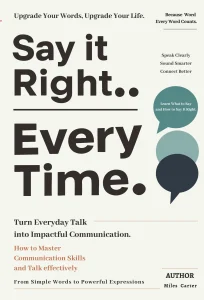
Say It Right Every Time by Miles Carter is a practical communication guide for finding the right words when conversations become difficult.
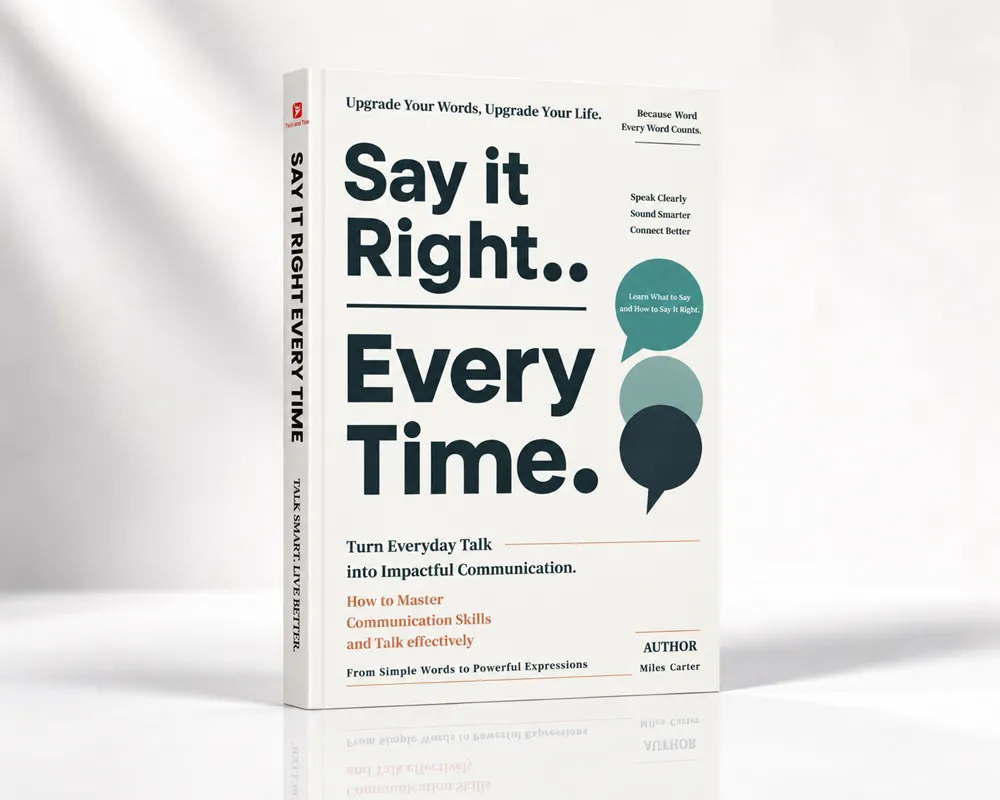
The book covers situations such as saying no, expressing your needs, handling conflict, and speaking up at work. Through practical examples and contrasting ways of phrasing a message, it helps readers understand how wording can change the way a conversation unfolds.
That makes its value extend beyond a single confrontation. The skills involved in responding to a rude comment are also useful when you need to set a boundary, disagree with someone, address an uncomfortable question, or make your position clear without overexplaining.
You cannot control whether someone chooses to be rude. But you can learn to communicate more clearly instead of leaving every difficult conversation wishing you had handled it differently.
If you want practical communication tools for the moments when the right words matter most, Say It Right Every Time offers a place to start.
Final Thoughts: Respond Without Losing Yourself
When someone insults you, you don’t have to react immediately, defend every part of yourself, or come up with a devastating comeback.
Pause before responding. Ask for clarification when it helps. State your boundary clearly when necessary. Walk away when continuing the conversation serves no purpose.
And if you freeze in the moment, don’t turn that experience into another reason to criticize yourself. You can reflect on what happened, prepare for similar situations, and practice expressing yourself more clearly next time.
The aim isn’t to have the perfect response to every insult. It’s to handle difficult conversations in a way that reflects your judgment, your boundaries, and the person you want to be.
FAQ: Responding to Insults
What should I say when someone insults me?
Choose a response that fits the situation. You might ask, “What do you mean by that?” to clarify a cutting remark, say “I don’t appreciate that comment” to set a boundary, or leave if the conversation becomes hostile. You don’t have to respond to every insult.
How do I respond to an insult without getting angry?
You may still feel angry, and that’s normal. Pause, take a breath, and give yourself time to think before speaking. Focus on what you want to achieve rather than trying to deliver an immediate comeback.
What if I freeze when someone insults me?
Freezing can happen when you’re caught off guard or feel threatened. You don’t have to force an immediate response. Give yourself time to process the situation, and consider preparing a few simple phrases you can use in future conversations.
Should I ignore someone who insults me?
Sometimes. If the comment is minor, the person is trying to provoke you, or responding could escalate the situation, ignoring it may be the most useful choice. If the behavior is repeated or crosses an important boundary, a direct response or seeking appropriate support may be more effective.
How do I stop thinking about an insult afterward?
Remind yourself that you don’t need to produce a perfect response to every difficult interaction. Separate any useful feedback from the personal attack, avoid repeatedly criticizing yourself for freezing, and consider what you might say if a similar situation happens again.
Can I learn to respond more confidently in difficult conversations?
Yes. Communication is a skill that can improve with practice. Learning how to express disagreement, set boundaries, ask direct questions, and choose appropriate wording can help you handle difficult conversations with greater clarity over time.