
Someone makes a comment that feels disrespectful. A colleague questions your decision in front of the team. A conversation with someone you care about suddenly turns into an argument. You know you should stay calm, but in the moment, frustration takes over and the right words are hard to find.
This is where emotional intelligence becomes important. It is not simply about recognizing your feelings or understanding other people’s emotions. It is also about managing your reactions, expressing yourself clearly, and choosing words that help a situation rather than make it worse.
If you want to improve emotional intelligence in everyday conversations, Say It Right Every Time by Miles Carter is a practical place to start. Rather than focusing only on abstract communication principles, this book offers real-life scripts and frameworks to help you handle uncomfortable situations with greater confidence and maturity.

What Emotional Intelligence Looks Like in Everyday Conversations
Emotional intelligence is often discussed as a personal quality, but its effects are easiest to see in the way people communicate.
Think about the last time someone criticized you. Did you immediately defend yourself, stay silent even though something bothered you, or respond in a way you later regretted? These reactions are common, especially when a comment touches a sensitive point.
Developing emotional intelligence means learning to recognize that initial reaction before deciding what to do next. It helps you understand your feelings without letting them dictate every word you say.
In everyday life, this can mean learning to:
- Respond to criticism without becoming defensive.
- Express disagreement without turning it into a personal argument.
- Set limits without feeling the need to explain yourself repeatedly.
- Listen to someone else’s frustration without immediately taking it as an attack.
- Stay composed when someone makes a rude or provocative comment.
These abilities are useful at work, in friendships, in family relationships, and whenever a conversation becomes emotionally uncomfortable.
Say It Right Every Time by Miles Carter: Turn Emotional Awareness Into Better Responses
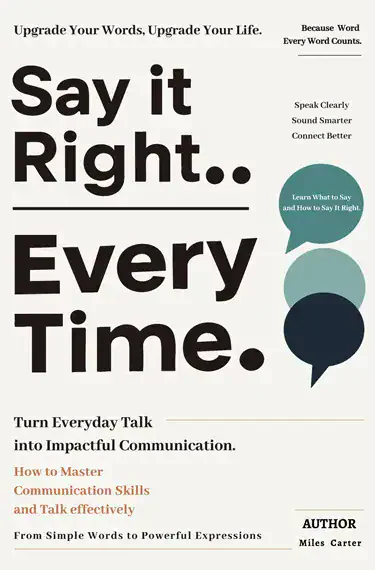
Understanding what you should do is one thing. Finding the right words when you are under pressure is another.
Say It Right Every Time by Miles Carter is designed to help readers handle that gap. The book contains 115 practical communication scripts and 15 frameworks covering personal interactions, emotional responses, and professional situations.
Instead of leaving you with general advice such as “be more confident” or “stay calm,” it gives you examples of how to respond when you do not know what to say.
For example, when someone makes an inappropriate remark, your first instinct might be to insult them back or pretend the comment did not bother you. The book presents alternative responses that allow you to address the situation without automatically escalating it.
When a colleague criticizes your work, you can learn to ask for specific feedback instead of immediately becoming defensive. When a conversation gets heated, you can acknowledge the tension and suggest taking a short break before continuing. When someone pushes you to do something you cannot accommodate, you can communicate your limits without turning the exchange into a confrontation.
The aim is not to memorize every sentence or make your conversations sound rehearsed. It is to give you practical examples that you can adapt to your own personality and circumstances.
5 Communication Skills That Help You Build Emotional Intelligence
The book’s practical examples cover several abilities that can make a meaningful difference in how you handle emotions and communicate with others.
1. Respond to Criticism Without Taking Everything Personally
Criticism can trigger embarrassment, anger, or self-doubt, particularly when it happens in front of other people. A defensive response may shift the conversation away from the actual issue and create an unnecessary argument.
Say It Right Every Time offers examples of how to acknowledge feedback, ask what could be improved, and respond more thoughtfully. These approaches help you consider whether criticism contains useful information without automatically accepting every negative judgment about you.
2. Handle Rude Comments Without Losing Your Composure
A sarcastic remark or an insulting comment can make you feel that you need to defend yourself immediately. However, reacting with equal hostility can leave you looking just as confrontational as the person who started the exchange.
The book explores ways to address rude behavior through calm questions and direct statements. Depending on the situation, you might ask the person to clarify what they meant or explain that you are willing to continue the conversation only if it remains respectful.
These responses allow you to acknowledge inappropriate behavior without surrendering control of your own actions.
3. Express Your Feelings Without Blaming Others
When emotions run high, people often use absolute statements such as “You never listen to me” or “You always make everything difficult.” These expressions may communicate frustration, but they can also make the other person feel attacked.
A more constructive approach is to describe your experience, explain what concerns you, and say what you need from the conversation. This makes it easier to discuss the actual problem rather than argue about who is at fault.
The book’s mature-expression examples help readers find more thoughtful ways to communicate disagreement, disappointment, and frustration.
4. Set Limits Without Feeling Guilty
Emotionally difficult situations often arise when people expect too much from you, ask intrusive questions, or repeatedly ignore your time and preferences.
You may feel pressured to agree because you do not want to disappoint someone or appear impolite. Yet agreeing to everything can lead to resentment and unnecessary stress.
Say It Right Every Time includes examples of how to decline requests, protect your time, keep personal matters private, and communicate professional boundaries. The emphasis is on being clear and respectful without overexplaining every decision.
5. Stay Calm When a Conversation Becomes Heated
When another person raises their voice or becomes visibly upset, it is easy to match their intensity. Unfortunately, this often makes it harder for either person to listen or think clearly.
The book includes examples of how to acknowledge tension, request a pause, and return to the discussion when both people are better able to communicate.
This skill is particularly valuable in close relationships and workplace disagreements, where the goal is not simply to win an argument but to reach a better understanding or practical resolution.
Who Should Read Say It Right Every Time?
This book may be especially useful if you recognize yourself in any of these situations:
- You replay conversations afterward because you wish you had responded differently.
- You become defensive when someone questions your decisions.
- You struggle to disagree without worrying that you will damage the relationship.
- You want to stand up for yourself without sounding aggressive.
- You know what you feel but cannot find the right words to express it.
- You want to handle workplace pressure and uncomfortable interactions more professionally.
You do not need to struggle with every one of these issues to benefit from the book. Even improving one recurring communication pattern can make everyday interactions feel less stressful.
The most useful approach is to start with situations you encounter frequently. Choose a few examples that feel relevant, practice adapting the wording, and pay attention to how different responses affect the conversation.

How to Apply the Book in Real Life
Reading about emotional intelligence is a good starting point, but the real benefit comes from using what you learn.
Try this simple approach as you work through the book:
First, identify your usual reaction. Think about the situations that make you defensive, frustrated, or uncomfortable. Notice whether you tend to argue, withdraw, apologize unnecessarily, or agree when you would rather say no.
Next, choose a better response. Find a script or communication framework that fits the situation. Adjust the wording so it sounds natural when you say it aloud.
Then, practice before you need it. Rehearse the response privately or write down a few sentences you could use. It is much easier to communicate thoughtfully when you have already considered your options.
Finally, reflect on the outcome. After a difficult conversation, consider what worked and what you would change next time. The goal is not to control another person’s reaction. It is to become more intentional about your own.
Over time, these small adjustments can help you communicate with greater clarity and handle uncomfortable moments with less anxiety.
Final Thoughts
Emotional intelligence is not about suppressing your feelings or remaining pleasant no matter how other people treat you. It is about understanding your emotions, considering the situation, and choosing a response that reflects what you actually want to communicate.
For readers who want practical help applying these skills, Say It Right Every Time by Miles Carter brings together 115 communication scripts and 15 frameworks for handling criticism, disagreements, boundaries, and other challenging interactions.
If you often know what you want to say but struggle to express it in the moment, this book can help you build a more useful set of responses for everyday life. With practice, you can become more confident in difficult conversations, protect your self-respect, and communicate in ways that support healthier relationships.