
I still remember the meeting. The one where I sat silent while my idea got taken by someone else. It wasn’t that I had nothing to say. I had everything to say. But the words felt stuck somewhere between my brain and my mouth. So I nodded along, smiled, and watched another person get the credit.
That was years ago. But honestly, I’ve seen the same thing happen to so many people since. Communication and workplace dynamics are deeply connected. The person who speaks clearly gets the project. The person who stays quiet gets the silent treatment. It feels unfair. And in some ways, it is. But here’s what I’ve learned: speaking up is a skill. Not a personality trait. And skills can be learned.
Why Communication and Workplace Conversations Feel So Hard
Why does talking to a colleague feel harder than talking to a friend? I think about this a lot. With friends, there’s no judgment. No performance review hiding behind every sentence. But at work, every word feels weighted. You want to be assertive, but not aggressive. Confident, but not arrogant. It’s exhausting.
I remember asking my mentor about this once. She laughed and said, “You’re overthinking it.” Maybe she was right. But overthinking comes naturally to me. Maybe it does to you too.
Here’s what I’ve come to understand. Communication and workplace interactions fail when we focus on ourselves instead of the person we’re talking to. We worry about how we sound. Whether we’re being clear. Whether we’re being liked. But we forget to think about what the other person needs to hear.
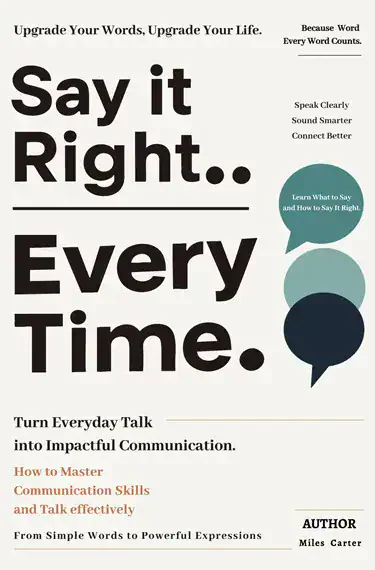
There’s a book called Say It Right Every Time by Miles Carter that talks about this. Carter’s point is simple. Most communication problems come from unclear phrasing. He shows how small changes in word choice can completely change how a message lands. He compares effective and ineffective phrasing side by side. And honestly, seeing them next to each other is a bit humbling. You realize how often you’re using the ineffective version without knowing it.
How to Fix Communication and Workplace Misunderstandings
So what do you do about it? You practice. Every single day. I’m not talking about big dramatic changes. I’m talking about small adjustments.
Let me give you an example. Instead of saying “I think we should try a different approach,” try saying “Let’s try a different approach.” See the difference? One sounds unsure. The other sounds decisive. It’s a tiny change. But it changes how people hear you.
Another example. When someone interrupts you, don’t just let it happen. Say “Let me finish this thought.” Calmly. Firmly. No apology in your voice. I know this feels awkward at first. It did for me. But the more you do it, the more natural it becomes.
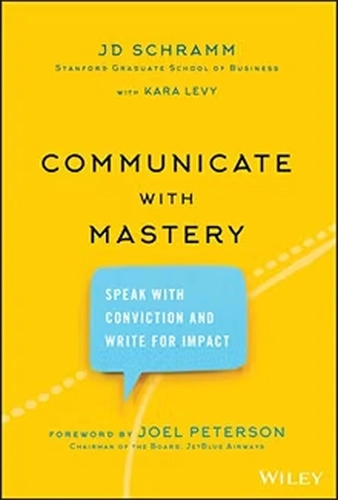
J.D. Schramm’s book Communication Mastery offers a useful framework for this. He calls it AIM. It stands for audience, intention, and message. Before you speak, ask yourself three questions. Who is my audience? What do I want them to understand? And what’s the clearest way to say it? When you align those three things, communication becomes much clearer.
I tried this before a difficult conversation with my manager. I wrote down my answers to those three questions. It took five minutes. But when I walked into that office, I knew exactly what I wanted to say and why. The conversation went better than I expected. Not because I’m a natural speaker. Because I prepared.
The Five Second Reset: A Simple Communication Ritual
Here’s a tool I use when conversations get tense. I call it the Five Second Reset. It sounds almost too simple. But it works.
When you feel yourself getting defensive or emotional, stop. Take a breath. Count to five in your head. Then respond. Those five seconds give your brain time to catch up with your emotions. You’ll say something calmer. Something clearer. Something you won’t regret later.
I use this in meetings. I use this with my kids too. It works everywhere. Not because five seconds is magic. Because it breaks the pattern of reacting.
There’s another book that’s helped me with this. Humor, Seriously by Jennifer Aker and Naomi Bagdonas. It’s the only business book I’ve ever laughed out loud reading. The authors are Stanford Business School professors. And their argument is refreshing. Humor isn’t just for funny people. It’s a communication tool. When you can find appropriate levity in a conversation, people relax. They connect with you. It makes the hard conversations easier.
I used to think I wasn’t funny enough to use humor at work. But Aker and Bagdonas make a different point. You don’t need to be a comedian. You need to find humor that fits your personality. For me, that’s gentle self-deprecation. For you, it might be something else entirely.

What About Difficult Conversations?
Some conversations are just hard. Delivering bad news. Giving feedback. Asking for a raise. These conversations make my stomach hurt just thinking about them.
But here’s what I’ve learned. Avoiding them makes things worse. The tension builds. The resentment grows. And eventually, the conversation happens anyway. But now it happens in anger instead of calm.
Carter’s book has practical case studies for these situations. He shows exactly what to say and how to say it. Not vague advice. Actual sentences you can use. That’s what makes it different from other communication books. It gives you the words.
For example, when giving criticism, he suggests starting with what went well. Not as flattery. As context. Then move to what needs improvement. Then end with a forward-looking statement. It’s a simple structure. But it works.
When Communication and Workplace Relationships Feel Broken
Sometimes communication breaks down completely. You’ve tried everything. You’ve used the frameworks. You’ve practiced the phrases. And still, nothing works.
What then?
I think the answer is patience. Relationships at work take time. Just like any other relationship. You can’t fix everything in one conversation. But you can make progress. One conversation at a time.
I remember a colleague I clashed with constantly. We had completely different styles. She was direct. I was indirect. We drove each other crazy. But over time, we learned to appreciate each other. Not because we changed. Because we understood each other better.
She still says things in a way that makes me cringe. And I probably still frustrate her. But we laugh about it now. That’s what humor can do. It doesn’t solve every problem. But it makes the problems more bearable.
A Final Thought on Communication and Workplace Growth
I think about that meeting where I stayed silent. I used to feel embarrassed about it. But now I see it differently. That moment taught me something important. Silence has a cost. If you never speak up, you never get what you want. And worse, you start to disappear.
You don’t have to be the loudest person in the room. You just have to be present. To say what you mean. Calmly. Clearly. And if you’re not sure how, that’s okay. There are tools for that. Books like Carter’s, Schramm’s, and Aker and Bagdonas’s can help. But the real work is yours. It’s showing up every day and trying again.
The next time you’re in a meeting and you have something to say, say it. Even if your voice shakes. Even if you’re not sure it’s perfect. Say it anyway. That’s how communication and workplace confidence grow. One small moment at a time.
References:
- Carter, M. Say It Right Every Time. Practical guidance on effective phrasing.
- Schramm, J.D. Communication Mastery. The AIM framework for strategic communication.
- Aker, J. & Bagdonas, N. Humor, Seriously. Stanford Business School research on levity.