I remember sitting in my car outside our apartment, phone in my hand, waiting for a text back. Not a big text. Just a reply. Any reply. My chest felt tight and I kept checking the screen every thirty seconds. My husband was at work. He was fine. I was not fine.
That was years ago, and it took me a long time to name what was happening. I was not needy by nature. I was emotionally dependent, and I had no idea how much it was running my life. Maybe you recognize this feeling too. You love someone, and somewhere along the way, their mood became your mood. Their silence became your panic. Their distance became your proof that you were unlovable.
If that sounds familiar, this article is for you. We will talk about what emotional dependency in relationships actually looks like, why it forms, and the practical steps that helped me (and many parents I know) feel grounded again.
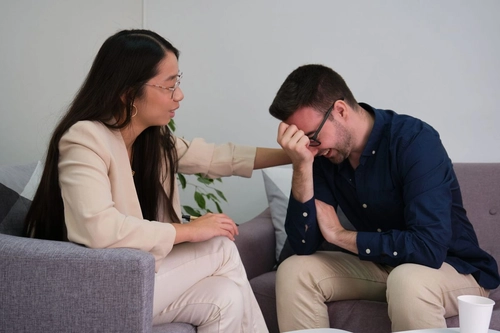
What Does Emotional Dependency in Relationships Look Like on a Normal Tuesday?
The word “dependency” sounds clinical. It is not. It shows up in small moments.
You send a message and then watch the screen. You feel off until they say everything is okay. You change your plans because they seem slightly distant. You ask for reassurance constantly, and even when you get it, the relief only lasts an hour.
I did all of this. I also did something trickier. I stopped making decisions without checking in first. What should we cook? What should we do this weekend? Do you think I handled that conversation okay? I was outsourcing my sense of safety to another person. And that person, no matter how loving, could not carry that job forever.
Here is what I learned from sitting with this for years. Emotional dependency is not about loving too much. It is about feeling too little of yourself when you are alone. The relationship becomes the anchor, and without it, you drift. Why do we drift? Usually because somewhere along the way, we learned that our own feelings are not enough to hold us.
Why Do I Feel So Dependent on My Partner for My Happiness?
This question haunted me. I thought something was broken in me. But here is what I found. Most of us who struggle with emotional dependency in relationships did not start that way. We became that way.
For me, it started in childhood. My parents loved me, but they were busy and distracted. I learned early that my feelings only mattered when someone else noticed them. So I became good at reading other people. I became excellent at adjusting myself to keep the peace. And I carried that skill into my marriage.
Does that sound like you? Maybe you grew up with a parent who was unpredictable. Or you had to earn love by being helpful and agreeable. Or you simply never learned how to soothe yourself when you felt scared. None of that is your fault. But it is your responsibility now.
I want to be honest with you. Understanding the why helped me feel compassion for myself. But understanding alone did not change anything. I had to do something different. I had to practice being with myself, even when it felt painful.
How to Stop Feeling Emotionally Dependent in Your Relationship
There is no magic switch. I wish there was. But there is a path, and I walked it slowly. Here is what worked for me, and what I have seen work for other parents and partners.
The first step is noticing without judging. When you feel that spike of anxiety because they have not replied, just say to yourself, “Oh, there it is. That is the old feeling.” You are not trying to make it go away. You are just watching it. That small shift creates space between your feeling and your reaction.
The second step is building a “self-check” habit. Every morning, ask yourself one question. “What do I need today, regardless of what my partner does?” It can be a walk. A hot shower. Ten minutes of silence. The answer does not matter. The practice matters. You are telling your brain that your needs exist on their own.
The third step is what I call a “solo anchor.” This is one activity you do alone, every week, that fills you up. For me, it was swimming. For my friend, it was pottery. For another mom I know, it was going to the library alone. The activity does not matter. The point is that you are proving to yourself, week after week, that you can feel good without another person present.
The 10-Minute Reconnection Ritual That Changed How I Handle My Emotions
I want to share a specific tool that helped me more than anything else. I call it the “10-Minute Reconnection Ritual.” It sounds fancy. It is not.
When I felt that familiar panic rising, I used to reach for my phone or my partner immediately. Instead, I started doing this. I set a timer for ten minutes. I sat somewhere quiet. And I asked myself three questions out loud.
What am I actually feeling right now? (Not what I think I should feel. The real feeling.)
What does this feeling need? (Not what my partner should do. What the feeling needs.)
What is one small thing I can give myself in this moment? (A glass of water. A blanket. A few deep breaths.)
The first time I tried it, I cried. Not because I was sad. Because I realized I had never asked myself those questions before. I had always looked outward for answers. This ritual forced me to look inward.
I am not saying this fixes everything overnight. It does not. But it gives you a moment of choice. And choice is where independence grows.

What to Do When Your Partner Is the One Who Feels Dependent
Maybe you are reading this and thinking, “This is not about me. This is about my partner.” That is a different kind of hard. You love them. You also feel drained.
Here is what I have learned from friends in this situation. You cannot fix their dependency by giving more reassurance. That actually makes it worse. Instead, you can be kind and clear. You can say, “I love you, and I believe you can handle this.” Then you step back. It feels harsh at first. It is not harsh. It is respectful. You are telling them they are capable.
Emotional Dependency in Relationships at Different Ages and Stages
This pattern shows up differently depending on where you are in life. In your twenties, it might look like constant texting and checking up. In your thirties, with kids and jobs, it might look like resentment. You feel like you give everything and get nothing back, because you have made your partner your only source of comfort.
For older couples, dependency can look like fear. Fear of being alone after decades together. Fear of losing the person who has been your whole world. Each stage has its own flavor. But the core is the same. Somewhere along the way, we forgot that we are whole on our own.
One Last Thing
I still have moments where I reach for my husband instead of myself. I still feel that tight chest when he is quiet. But I no longer believe that his mood determines my worth. That took years. And it started with a simple decision.
I decided that I deserved to feel okay, even when no one else was there to reassure me. You deserve that too. You are not too much. You are not broken. You are just learning something new. And you can learn it, one ten-minute ritual at a time.