
The email landed at 11:47 PM. My colleague had cc’d our entire team, questioning my numbers on a project I’d spent three weeks building. My face went hot. My fingers hovered over the keyboard. I wanted to fire back a defense so sharp it would cut through the screen.
I didn’t. Because I’ve learned that conflict handling in the moment is mostly about what you don’t do.
That night, I closed my laptop, walked away, and thought about what I actually wanted. Not to win the argument. Not to prove I was right. I wanted the project to succeed, and I wanted to work with this person again tomorrow. That shift changed everything about how I approach disagreements at work.
Why Does Conflict Handling Feel So Personal at Work?
Here’s the thing about workplace conflict. It rarely feels like a disagreement about facts. It feels like an attack on your competence, your judgment, your identity as a capable professional. And when that happens, your brain goes into survival mode.
I remember sitting in a meeting once, watching two senior managers go at it over a marketing budget. Their voices rose. Their faces reddened. Neither one was actually listening to the other. They were both just waiting for the other person to stop talking so they could make their next point.
That’s not conflict resolution. That’s a performance.
The root cause of most workplace conflict is not bad intentions. It’s miscommunication wrapped in ego, layered with fear about resources or recognition or job security. When you understand that, conflict handling becomes less about fighting and more about untangling.
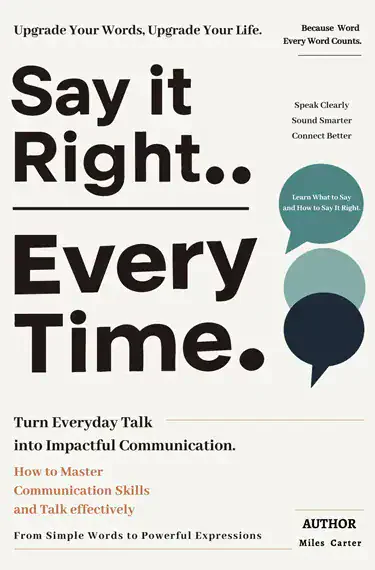
For me, the real turning point came when I read Miles Carter’s Say It Right Every Time. The subtitle says it all: “Practical tools for the moments that matter, say what you mean, calmly.” Carter uses these before-and-after comparisons that are almost embarrassing to read because you recognize yourself in the wrong versions. The ineffective phrasing, the defensive tones, the loaded words. Then he shows you the right way, which is so simple it feels like it should be obvious.
What Are the 3 Steps to Handle Conflict Without Escalation?
Here’s the framework I now use for every difficult conversation, whether it’s with a boss, a peer, or a direct report. It’s not complicated, but it requires you to slow down when everything in you wants to speed up.
Step one: Separate the person from the problem.
When my colleague sent that email, I wanted to respond to the person. I wanted to make her feel stupid for questioning me. But that would have created an enemy. Instead, I separated the issue from the individual. She had a concern about my numbers. That was the problem. The concern, not her, was what needed addressing.
Try this: instead of “You’re wrong about this,” say “I can see where you’re coming from, and I think we might be looking at different data.” See the difference? One invites a fight. The other invites a conversation.
Step two: Ask one clarifying question before you respond.
This single habit has saved me more times than I can count. When someone challenges you, your instinct is to defend. But if you ask a question first, you buy yourself time and you show the other person you’re actually listening.
“Can you help me understand what specifically concerns you about this approach?”
That’s it. That’s the whole question. It does three things. It slows down the exchange. It gives you information you might not have had. And it disarms the other person because you’re not attacking back.
I’ve seen people’s entire demeanor change when they’re asked this. The defensiveness drains out of their voice because they realize they’re being heard, not fought.
Step three: State your position using “I” language.
Think about the difference between “You’re being unreasonable” and “I’m having trouble understanding your perspective here.” The first one points a finger. The second one opens a door.
Carter’s book is full of this kind of phrasing. He shows you how to express opinions with confidence without steamrolling people. I started using his techniques in job interviews, honestly, before I even tried them in conflicts. And it worked. When you can say what you mean calmly, you don’t need to raise your voice to be heard.
The 5-Minute Pause Rule: A Tool for Hot Moments
I call this the “Pause and Rephrase” ritual. It’s a simple framework I developed after one too many late-night email regrets.
When conflict arises, especially in writing, you do three things. First, you write your response, all of it, every angry word. Get it out of your system. Then you close the draft and step away. Give it five minutes. Drink water. Look out the window. Let your nervous system reset.
Then you come back and rewrite. Not editing, rewriting. You ask yourself one question: “What do I actually want the outcome of this message to be?” If the answer is “to make them feel bad,” you’re not ready to send it. If the answer is “to solve the problem,” you’re on the right track.
I once wrote a three-paragraph response to a client who had questioned my team’s work. It was sharp, it was thorough, it was a little bit cruel. I stepped away. When I came back, I deleted two of the three paragraphs and replaced them with a single sentence: “I understand your concern, and I’d like to walk you through our process in more detail.”
The client responded positively within the hour. No fight. No escalation. Just a conversation.
How Storytelling Changes Conflict Conversations
Rob Biesenbach’s Unleash the Power of Storytelling taught me something unexpected. When you’re stuck in a conflict, the most effective way through it is often not more logic. It’s a story.
Think about it. When you tell a story, you invite the other person into your perspective. You’re not arguing with them anymore. You’re showing them a picture. And humans are wired to respond to stories in ways they don’t respond to arguments.
I was in a disagreement about project timelines once. My colleague thought we could deliver in two weeks. I knew we couldn’t. Instead of listing all the reasons why, I told her about a similar project we’d done the previous quarter. I described how the testing phase alone had taken a week longer than expected. I didn’t say “your timeline is unrealistic.” I just told her what had happened before.
She heard the story, and she made the connection herself. “Okay,” she said. “Three weeks, then.”
That’s the power of narrative in conflict handling. It bypasses the defensive walls and speaks directly to shared understanding.

What About Conflicts That Can’t Be Solved in One Conversation?
Some conflicts are deeper. They involve competing priorities, or personality clashes, or structural issues in how your team operates. These don’t resolve in a single conversation. They require a different approach.
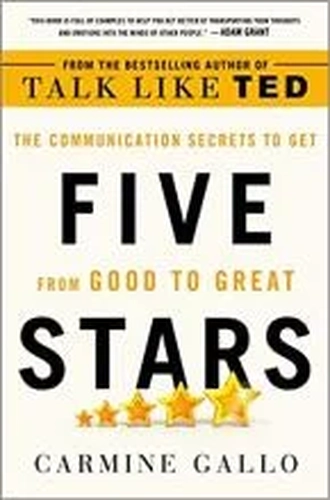
Carmine Gallo’s Five Stars talks about persuasion as the key skill for getting ahead in the modern world. Gallo argues that communication is no longer a soft skill. It’s the human edge that makes you irreplaceable. And nowhere is that more true than in ongoing workplace conflicts.
For these longer conflicts, I use what I call the “Reconnection Script.” It’s a check-in conversation you have regularly with the person you’re in conflict with. The script goes like this: “I know we’ve had some tension around [specific issue]. I want to make sure we’re still aligned on the bigger picture. Can we talk about what’s working and what’s not?”
This is not about being nice. This is about being strategic. You’re acknowledging the conflict without letting it define your relationship. You’re keeping the communication channels open. You’re showing that you’re willing to work on it, which often inspires the other person to do the same.
One thing I’ve learned is that most people don’t actually want to be in conflict. They want to be understood. When you offer that understanding, even to someone who’s been fighting you, it’s disarming.
Age and Experience: How Your Approach Changes Over Time
Early in my career, I thought conflict handling meant standing your ground and never backing down. I was wrong. It’s actually about knowing when to push and when to pause.
I’ve seen young professionals make the mistake of avoiding conflict entirely, hoping it will just go away. It never does. It just simmers and comes back stronger. I’ve also seen senior people make the opposite mistake, steamrolling anyone who disagrees with them. That creates a culture of silence where problems never surface until they’re disasters.
The sweet spot is somewhere in between. You engage with the conflict directly, but you do it with respect and curiosity. You hold your ground on what matters, and you stay flexible on everything else.
A mentor once told me, “You can be right, or you can be effective. Pick one.” That stuck with me. In a disagreement, being right is about proving yourself. Being effective is about getting the outcome you need. They’re not the same thing.
How Do You Prepare for a Difficult Conversation?
Preparation is half the battle in conflict handling. Before you walk into a conversation you’re dreading, take ten minutes to think through what you want to say.
First, write down the outcome you want. Not just the immediate outcome, but the long-term relationship outcome. Do you want to work with this person again? Then that should shape how you speak.
Second, anticipate their perspective. What might they be feeling? What pressures might they be under that you don’t know about? This empathy is not weakness. It’s intelligence. It lets you predict their responses and prepare for them.
Third, practice the phrasing out loud. I know this sounds silly, but it works. Say your opening line to yourself a few times. “I wanted to talk about what happened in the meeting yesterday. I felt frustrated, and I want to understand your perspective.” Hear how calm that sounds? That’s what you’re going for.
One Last Thing
That night I closed my laptop instead of firing back, I learned something about myself. The urge to respond immediately was strong. But the desire to be effective was stronger.
Conflict handling is not about never feeling angry or hurt. It’s about what you do with those feelings. It’s about choosing the conversation over the fight. It’s about remembering, even in the heat of the moment, that the person across from you is just another human trying to do their job.
When I finally responded to my colleague the next morning, I asked her a question. I asked her to walk me through her concerns. She explained, I listened, and we found that we were actually looking at two different versions of the same spreadsheet. That was it. No drama. No enemies. Just a misunderstanding that took five minutes to resolve.
The books I’ve mentioned, Carter’s Say It Right Every Time, Biesenbach’s Unleash the Power of Storytelling, and Gallo’s Five Stars, are all on my shelf. They’re not just about communication at work. They’re about how to be a person who can handle difficult moments with grace.
The next time someone challenges you, take a breath. Ask a question. Tell a story. And remember that the goal is not to win the argument. The goal is to solve the problem, together.