
Tuesday, 6:47 PM. I asked my son to put his shoes away for the third time. He looked at me, then at the shoes, then back at me. Nothing happened. My voice went up a notch. He started humming. I felt that familiar heat behind my ears, the mix of exhaustion and fury that makes you say things you regret before dinner is even on the table.
I spent two years in that loop. Ask, repeat, raise your voice, feel guilty, apologize, repeat.
Then I realized something that changed everything. The problem was not that my son refused to listen. The problem was that my talking was designed for an adult ear, not a six-year-old brain. I was speaking in paragraphs. He was hearing static.
So I started figuring out how to talk so kids will listen. Not from a textbook. From trial, error, and a whole lot of failed bedtimes. Here is what I found, and the actual phrases that turned things around in our house.
Why Does My Child Ignore Me Until I Yell?
Let me be honest about what I learned the hard way. When I asked my daughter to clean her room, I used a full sentence with a reason attached. She heard the first three words, maybe. Her brain registered “mom is talking” and then switched channels.
Kids under seven process language differently. They do not have the working memory to hold a multi-step instruction while also resisting it. When I said, “Please pick up the blocks and put them in the bin and then wash your hands,” that was three separate demands disguised as one. Her brain took the path of least resistance. It ignored me.
There is also the attention factor. I was often talking to her while looking at my phone, or while walking past her toward the kitchen. She read my body language correctly. She knew I was not fully present. So why would she fully listen?
The turning point came when I read a line in Miles Carter’s book The Parent You Aspire to Be. He pointed out that backtalk and ignoring are usually not disrespect. They are signals. The child is telling you something they cannot put into words. Maybe they feel rushed. Maybe they were in the middle of play and switching tasks is genuinely hard for them. Maybe they just need you to look them in the eye first.
That reframing stopped being abstract when I tested it. I knelt down, put my hand on my son’s shoulder, and said, “I see you are building something important. I need your help for two minutes. Then you can go back.” He put the shoes away. No yelling. No tears. I almost fell over.

How to Talk So Kids Will Listen Without Repeating Yourself
Here is the practical part. The phrases below worked for my family. They might work for yours. The key is not the words themselves. It is what comes before them.
First, get physical. Do not call from another room. Ever. Walk to where your child is. Squat down to their eye level. Touch their arm gently. Wait until they look at you. This takes ten seconds. It saves ten minutes of repeated requests.
Second, use one sentence. Not a paragraph. One short sentence with a clear action. “Shoes in the bin.” “Teeth now.” “Jacket on.” Your child hears the whole instruction. There is nothing to filter.
Third, give a choice only when you mean it. Fake choices teach kids that your words are negotiable. If the answer is not actually up for discussion, do not phrase it as a question. Say “Time for bath” not “Do you want to take a bath now?” You are not asking. You are letting them know.
Here are the seven phrases I use daily now.
- “I need your eyes on me.” This is my attention reset. It works because it is specific and non-negotiable.
- “First X, then Y.” This is the magic formula. “First shoes away, then we read.” It gives the child a clear sequence and a reward at the end.
- “I hear you. That is hard.” Acknowledgment before direction. My daughter melts down less when I validate her frustration first.
- “What is your plan for this?” This one sounds odd but works surprisingly well with older kids. It hands them ownership.
- “I cannot make you, and I am not going to fight.” I use this when I feel my own temper rising. It disarms the power struggle.
- “Tell me what you heard.” After giving an instruction, I ask them to repeat it back. This catches miscommunication before it becomes a meltdown.
- “I am on your side.” I say this when they are upset. It does not fix the problem. It fixes the connection, which is the thing that actually makes listening possible.
The “One Touch” Rule for Getting Through
I call this the Reconnection Script. It is a three-step sequence I use every single time I feel ignored.
Step one is the touch. Physical connection before any words. A hand on the shoulder. A gentle turn of the chin toward me. This breaks their focus loop in a way that sound alone cannot. My daughter can tune out my voice entirely. She cannot tune out a hand on her arm.
Step two is the whisper. I lower my voice instead of raising it. This sounds backwards, but it works. When a child expects yelling and hears a whisper, they have to lean in to hear you. Leaning in is the first act of listening. I learned this from a friend who used to be a kindergarten teacher. She said the loudest thing in a classroom is a quiet voice.
Step three is the pause. After I give the instruction, I stop talking. I look at my child. I wait. The silence does the work. It gives them a moment to process and a moment to choose compliance without losing face. Rushing the pause is the most common mistake I still make.
This script takes twenty seconds. It has replaced about forty minutes of daily bickering in our house. Not perfectly. Not every time. But enough that I noticed the difference within a week.
What to Say When Your Child Talks Back
Backtalk is the fastest way to make me lose my cool. I will admit that. The first time my son told me “You are not the boss of me,” I felt my face get hot. My instinct was to pull rank. To remind him who pays the mortgage.
Here is what I learned. Pulling rank creates a power struggle. And in a power struggle with a child, nobody wins. The child does not actually want to defeat you. They want to feel like they have some control over their own life. Backtalk is often a clumsy request for autonomy.
So I say this now: “You sound frustrated. I get it. I am still the parent, and we are still doing this. Let us find a way that works for both of us.” Then I offer a real choice within my boundaries. “Do you want to put the toys away now or after you finish this game?” This gives them a say. It does not give them the wheel.
Becky Kennedy’s book Good Inside helped me here. She talks about the sentence a parent can repeat before responding: my child is a good kid having a hard time. I say that to myself when I feel my own shame flare up. Because when I yell, I am not just angry at my child. I am angry at myself for losing control. That shame makes me yell louder. Breaking that loop starts with one quiet sentence to myself.


adminEdit Profile
Age by Age: Adjusting Your Words
What works for a four-year-old will fail with a nine-year-old. Here is how I adjust.
For ages two to four, keep it simple and get close. One-step instructions. Physical guidance. My toddler responds to “gentle hands” better than a lecture about sharing. She needs me to show her, not tell her.
For ages five to seven, use sequence and choice. These kids can handle two-step instructions and limited choices. My six-year-old responds to the “first X, then Y” formula. He also responds to being asked for his input. “What do you think we should do about the toy situation?” gets him thinking instead of resisting.
For ages eight and up, use partnership and logic. These kids can handle consequences and reasoning. My oldest responds when I explain the why behind a rule. He also responds to being trusted. I say “I am trusting you to handle this” more than I say “because I said so.”
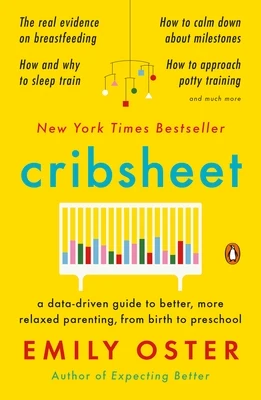
One thing that surprised me. Emily Oster’s Cribsheet showed me that some standard parenting advice has shockingly thin evidence behind it. That made me more confident trusting my own instincts. My instincts told me that my kids listen better when I sound like a human and not a policy announcement. The data did not contradict that.
One Last Thing
I still lose my temper. Last week I yelled at my daughter for spilling water on the floor for the second time in ten minutes. I saw her face crumple. I felt like a failure.
But here is what I have learned about how to talk so kids will listen. It is not about being perfect. It is about the repair. The morning after I yelled, I knelt down and said, “I am sorry I shouted. That was not how I wanted to talk to you. I was frustrated about the mess, and I took it out on you. That was not fair.” She hugged me. We cleaned up the water together.
My kids do not need a perfect parent. They need a parent who keeps trying, who apologizes, and who believes they are good kids having a hard time. That belief changes how you talk. And how you talk changes everything.