
I remember the exact moment I stopped pretending. My daughter was four. She was on the floor of the grocery store, screaming because I had peeled her banana wrong. Not peeled it at all. Peeled it wrong. There is apparently a correct way. I stood there holding a banana, surrounded by strangers, and I thought, “No one prepared me for this.”
That is the truth about what are the challenges of parenting. It is not the big stuff, usually. It is the banana. It is the third request to put on shoes. It is the lying about brushing teeth. These are the daily battles that drain us. We expect the hard parts to be sleepless nights and teenage rebellion. We do not expect the sheer grind of the ordinary.
This article is not a lecture. It is a map. We will look at why kids push back, what actually works when they do, and how to survive your own feelings during the chaos.
Why Is Parenting So Hard? Understanding the Real Struggles
So, what are the challenges of parenting, really? I spent years thinking my kid was broken, or worse, that I was broken. I read every blog. I tried every “hack.” Nothing stuck until I understood the root cause.
A child who is melting down is not giving you a hard time. They are having a hard time. This sounds simple, but it changes everything. When my son was five, he would refuse to get dressed every single morning. I would yell. He would cry. We were both miserable. I thought he was being defiant. He was actually overwhelmed. The tags in his shirt, the noise of the house, the pressure of the clock. His brain was flooded.
I think we also have to look at ourselves. Why do we react so strongly? For me, it was fear. Fear that I was failing. Fear that his behavior reflected badly on me. Fear that if I did not “fix” him, he would never succeed. That fear made me control him. And control always backfires.
I found a book called The Parent You Aspire to Be by Miles Carter. It was the first time I saw my own psychology in the mirror. It talks about how our anxiety and need for control come from our own roots, not our children’s behavior. It made me realize that the struggle is often a two-way street. They are testing boundaries. I was testing my own worth.

How Can Parents Handle Daily Friction Without Losing Their Cool?
If you are asking what are the challenges of parenting, you are likely looking for solutions, not just explanations. Here is what worked for us.
First, I had to stop seeing discipline as punishment. There is a great book, No-Drama Discipline by Daniel Siegel and Tina Payne Bryson. They argue that a meltdown is a brain that has lost access to its own reasoning. The child is not trying to embarrass you. They literally cannot access logic in that moment.
So, I stopped trying to reason with a screaming toddler. That was a game changer. I started to connect before I corrected. I would kneel down and say, “You are really upset about the banana. I see that.” That is it. No lecture. No fixing. Just acknowledgment. It felt weird at first. But the meltdowns shortened.
Here is the other thing I learned: connection is not manipulation. I am not doing it to make her stop crying. I am doing it to show her I am on her team. The crying stops faster when she knows I am not her enemy.

The 4-Step Reconnection Script for Everyday Struggles
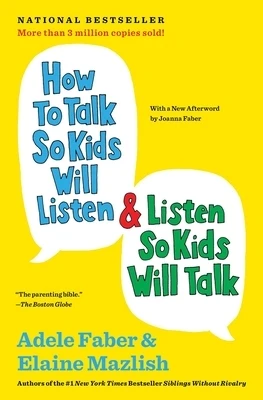
Let me give you a concrete tool. I call it the “Reconnection Script.” It is based on the ideas from How to Talk So Kids Will Listen & Listen So Kids Will Talk by Adele Faber and Elaine Mazlish. That book is pure gold for phrases to say when a child is furious.
When the backtalk starts, or the homework is thrown across the room, I use this structure.
Step 1: Acknowledge the feeling.
“I can see you are really angry about this homework.”
Step 2: State the boundary, simply.
“The homework still needs to be done.”
Step 3: Offer a choice that is safe.
“Do you want to do it at the kitchen table, or in your room?”
Step 4: Offer to help.
“Should I sit with you while you start?”
Here is the reality check. This does not work every time. Some days, my kid screams louder. Some days, I still lose my cool and yell. That is okay. The goal is not perfection. The goal is repair. When I yell, I go back later and say, “I am sorry I yelled. I was frustrated. I should have handled that better.” This teaches them accountability without shame.
What About Backtalk and Disrespect?
Backtalk is a big one on the list of what are the challenges of parenting. My daughter went through a phase where every answer was “Whatever” or “You are so mean.” It felt personal.
But here is what I learned. Backtalk is usually a request for power. They have none. They are trying to get some. Instead of fighting it, I gave her power in safe areas. I let her choose her clothes. I let her plan the weekend snack. When she felt she had control over her own small world, the need to fight me decreased.
How to Handle Lying and Emotional Outbursts
Lying is another classic struggle. I remember the first time my son lied straight to my face. I was devastated. I thought, “He is a liar. I have failed.”
But lying is often a fear response. They are afraid of the punishment. If I make it safe to tell the truth, they will do it more often. I now say, “Thank you for telling me. Let us figure this out together.” It feels counterintuitive. But it works.
For emotional outbursts, I remember the advice from The Parent You Aspire to Be: look for the real reason behind the behavior. Is my child tired? Hungry? Overwhelmed? Often, the meltdown has nothing to do with the toy they are crying about.
Common Parenting Problems and How Books Helped Me Solve Them
If you are looking for help, I found these books to be the most practical. They do not give vague advice. They give sentences to say.
- The Parent You Aspire to Be by Miles Carter. This one looks at your side of the equation. It helps with the anxiety and over-control. It uses real-life scenarios with wrong approaches and correct demonstrations.
- How to Talk So Kids Will Listen & Listen So Kids Will Talk by Adele Faber and Elaine Mazlish. This is the gold standard for communication. It gives you the exact phrases to use instead of lecturing.
- No-Drama Discipline by Daniel Siegel and Tina Payne Bryson. This helps you understand the developing brain. It is perfect for the parent who knows yelling is not working but has nothing to replace it with.
These books do not make the hard days disappear. But they give you a script. And on a bad day, a script is a lifeline.
What If I Am the Problem?
This is the hardest question to ask. I asked it a lot. The answer is, yes, sometimes I am the problem. My anxiety triggers her anxiety. My yelling triggers her yelling.
I am learning to manage my own emotions before I try to manage hers. I take a breath. I step into the bathroom for thirty seconds. I remind myself that she is not trying to ruin my day. She is trying to grow up. And growing up is messy.
How Do I Build Long-Term Communication Patterns?
You build trust by showing up the same way every time. You do not have to be perfect. You just have to be predictable. When you are calm, they learn calm. When you listen, they learn to talk.
It is about the long game. The goal is not a child who obeys out of fear. The goal is a child who respects you because they trust you. That takes time. It takes thousands of small moments where you choose connection over control.
One Last Thing
We started this with a melted banana. I want to go back to that. That day, I did not handle it well. I yelled. I dragged her out of the store. We both cried in the car.
But the next week, I was ready. I remembered the script. When she started to spiral about a broken cracker, I knelt down. I said, “You are so sad about that cracker.” She looked at me, surprised. She nodded. And just like that, it was over.
Parenting is not about never falling. It is about getting up, dusting yourself off, and trying a different way next time. What are the challenges of parenting? They are many. But facing them with honesty and love? That is the whole job. And you are doing better than you think.
[TITLE 1]: What Are the Challenges of Parenting? Daily Friction and Fixes
[TITLE 2]: What Are the Challenges of Parenting? Handling Tantrums and Backtalk
[TITLE 3]: What Are the Challenges of Parenting? A Guide for Exhausted Moms